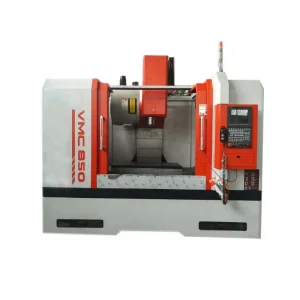
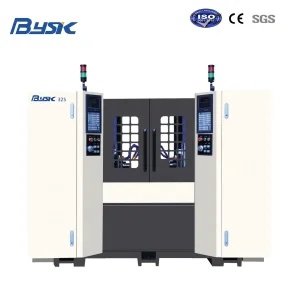
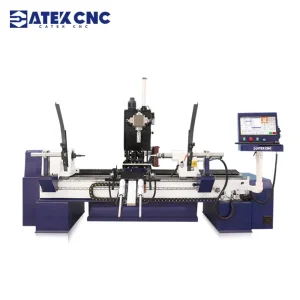
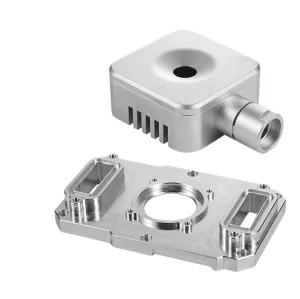
In the modern era of "Industry 4.0," the 4-axis CNC milling machine has emerged as the backbone of high-complexity manufacturing. Unlike traditional 3-axis systems, the addition of the 'A' or 'B' axis allows for continuous rotation, enabling the production of intricate geometries required in aerospace, automotive, and medical industries.
Today, the global market for 4-axis CNC technology is witnessing exponential growth. From the high-tech corridors of Germany and Japan to the booming industrial zones of North America, businesses are moving away from manual machining toward unmanned, intelligent production equipment. This shift is driven by the need for higher precision, reduced setup times, and the ability to machine multiple sides of a workpiece in a single operation.
Widespread adoption in Europe, SE Asia, and the Americas for complex component fabrication.
Integration of AI and IoT for real-time monitoring and predictive maintenance.
Drastic reduction in production cycles by eliminating secondary clamping processes.
The demand for customized OEM/ODM CNC solutions has never been higher. Global enterprises now require machinery that is not just robust, but also adaptable to specific localized application scenarios. Whether it's machining turbine blades for energy sectors or delicate titanium implants for the medical field, a 4-axis system provides the necessary flexibility.
Our engineering team at Shenzhen Cora CNC specializes in developing these tailored solutions. We understand that a factory in Brazil has different power and structural requirements than one in Singapore. Our 4-axis machines are designed with high-rigidity frames and high-speed spindles to ensure stability across diverse operating environments.
1. Digital Twin Technology: Before a single cut is made, the entire 4-axis milling process is simulated in a virtual environment to prevent collisions and optimize tool paths.
2. Sustainability & Eco-Friendly Design: Modern CNC machines, like our latest wood lathe series, focus on energy efficiency and reduced lubricant waste, meeting the strict environmental regulations of European and North American markets.
3. Hybrid Manufacturing: Combining subtractive milling with additive manufacturing (3D printing) in a single platform is becoming a reality for rapid prototyping and complex metal parts.
4. Automation & Unmanned Operation: With labor shortages globally, the push toward automatic loading and feeding systems has become a top priority for procurement officers.
China has evolved from a low-cost manufacturing hub to a center for high-tech industrial innovation. As a premier 4-axis CNC milling machine factory based in Shenzhen, we offer several distinct advantages:
Shenzhen Cora CNC Industrial Co., Ltd. is located in the commercial center of the Pearl River Delta—Shenzhen City. The company covers an area of nearly 10,000 square meters. Founded in 2003, we are specialized in creating unmanned, intelligent production equipment for the global market.
We are a manufacturer of numerical control equipment and automation equipment integrating R&D, design, production, sales, and after-sales. Our products are exported to overseas, reaching cooperation with countries including European nations, Brazil, Spain, Singapore, Mexico, Egypt, Kazakhstan, Mongolia, Pakistan, and other Southeast Asian countries.
Customer satisfaction is the driving force for our progress and self-improvement. Our goal is to become your promoter of “Industry 4.0”! We rely on high-quality products, a solid reputation, and premium pre-sales/after-sales service to maintain our standing as a top-tier Chinese exporter.
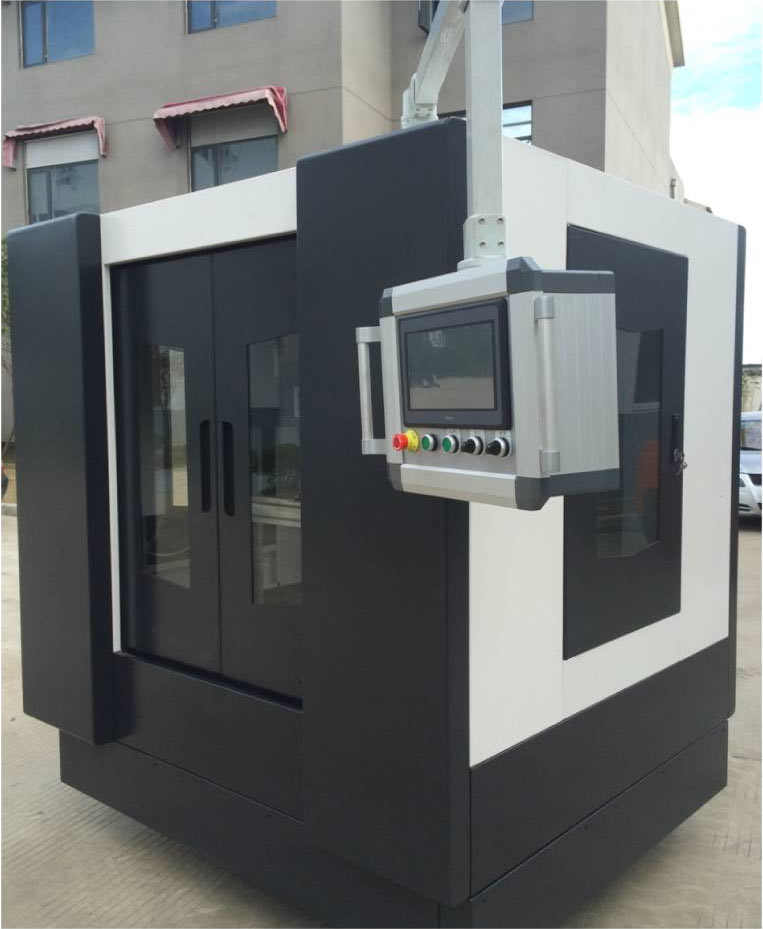
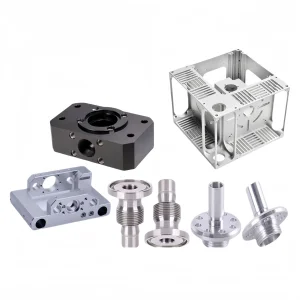
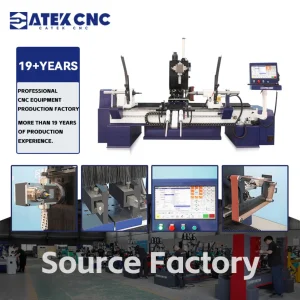
When international buyers look for 4-axis CNC machines, they aren't just buying hardware; they are investing in a solution. In the Automotive Sector, our machines are used for engine block milling and intricate transmission parts. In Aerospace, they handle the precision carving of structural ribs and brackets. For the Woodworking Industry, our multi-functional 5-axis and 4-axis lathes are transforming sofa armrest and furniture leg production into a fully automated process.
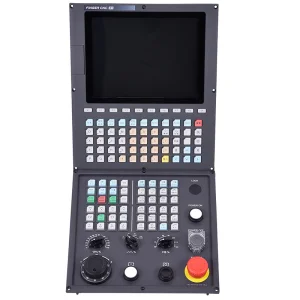
Our commitment to OEM/ODM means we can adjust the CNC control systems—whether it’s Fanuc, Siemens, or our proprietary multi-channel systems—to match the operator's familiarity and the workshop's technical standards.
 Cora CNC