In the modern industrial era, high-precision spindle systems serve as the "heart" of CNC machining. From the aerospace hangars in Seattle to the automotive assembly lines in Stuttgart, the demand for extreme rotational accuracy and thermal stability has never been higher. As global manufacturing transitions toward "Industry 4.0," the spindle system has evolved from a simple mechanical component into an intelligent, sensor-integrated powerhouse.
Currently, the global market is witnessing a surge in high-speed machining (HSM) requirements. High-precision spindle systems are essential for achieving sub-micron tolerances in industries like semiconductor manufacturing, medical device fabrication, and electric vehicle (EV) component production. Suppliers and exporters from China have become pivotal in this supply chain, offering a unique balance of advanced engineering, rapid innovation, and cost-efficiency that satisfies the rigorous standards of international buyers.
Widespread adoption across Europe, North America, and Southeast Asia, driven by the need for automated precision.
Spindles are now seamlessly integrated with AI-driven controllers to predict maintenance and optimize cutting loads.
The push for miniaturization in electronics requires spindles that can operate at speeds exceeding 60,000 RPM with zero vibration.
The trajectory of the spindle industry is defined by "The Three Smarts": Smart Monitoring, Smart Cooling, and Smart Adaptability. Future-forward factories are no longer satisfied with static equipment. They require systems that can provide real-time feedback on bearing temperature, vibration harmonics, and displacement. This data is critical for preventing catastrophic failures and ensuring the longevity of expensive cutting tools.
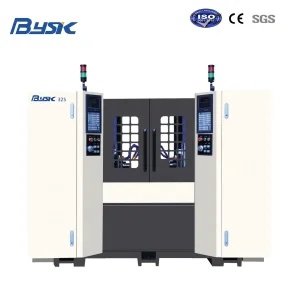
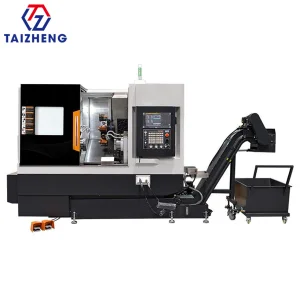
One of the most significant trends is the move toward multi-spindle configurations. As seen in our Bysk By32s series, having multiple spindles operating simultaneously allows for complex metal turning and milling in a single setup. This dramatically reduces cycle times and eliminates the cumulative errors associated with transferring parts between different machines. For high-volume manufacturers, this is the gold standard for ROI.
Moreover, the shift toward sustainable manufacturing has led to the development of energy-efficient motorized spindles. By minimizing friction through advanced ceramic ball bearings and optimizing the magnetic fields within the spindle motor, manufacturers can achieve higher torque density with lower power consumption. This environmental consideration is becoming a key procurement criterion for Fortune 500 engineering firms.
Procuring a high-precision spindle system is a complex decision that involves more than just looking at the price tag. International buyers from regions like Brazil, Spain, and Singapore focus heavily on the "Total Cost of Ownership" (TCO). This includes the initial purchase price, the cost of specialized cooling systems, energy consumption, and the availability of technical support.
Shenzhen Cora CNC Industrial Co., Ltd. understands these pain points. We have engineered our export process to be as precise as our machinery. From ensuring that every unit complies with CE and international safety standards to providing comprehensive after-sales support in multiple languages, we bridge the gap between Chinese manufacturing excellence and global application needs.
Shenzhen Cora CNC Industrial Co., Ltd. is located in the commercial center of the pearl river delta—Shenzhen City. The company covers an area of nearly 10,000 square meters. Founded in 2003, we specialize in creating unmanned, intelligent production equipment. As a manufacturer of numerical control and automation equipment integrating R&D, design, production, sales, and after-sales, we are at the forefront of China's "Industry 4.0" push.
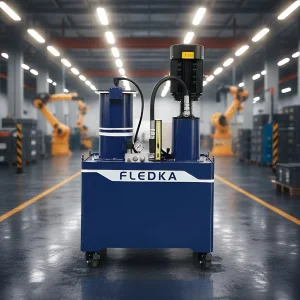
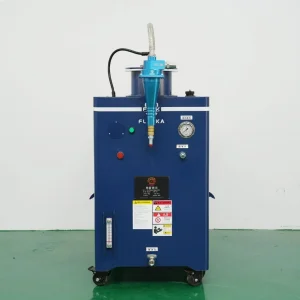
We don't just sell spindles; we provide complete machining ecosystems. Our Fldka 30bar High Pressure Through Spindle Coolant Filtration System is a prime example. Without proper cooling and filtration, even the best spindle will fail due to thermal expansion or chip contamination. Our systems ensure that high-performance cutting tools are supported by consistent, clean coolant flow, extending both tool and spindle life.
Our products are exported to overseas, and the countries we have reached cooperation with mainly include: European countries, Brazil, Spain, Singapore, Mexico, Egypt, Kazakhstan, Mongolia, Pakistan and other Southeast Asian countries. We have precision processing equipment and top-tier precision detection equipment at home and abroad, backed by a perfect quality assurance system. We rely on high-quality products, a solid reputation, and premium pre-sales and after-sales service.
The difference between a standard spindle and a High-Precision Spindle System lies in the details. At Shenzhen Cora CNC, we focus on dynamic balancing. Every spindle undergoes rigorous testing to ensure that vibration levels are kept within G0.4 or G1.0 standards. This is vital because vibration is the enemy of surface finish; even the smallest oscillation can result in "chatter" marks on a finished part.
Bearing technology is another cornerstone. We utilize hybrid ceramic bearings which offer several advantages over traditional steel: they are harder, lighter, and have a lower coefficient of thermal expansion. This allows for higher RPMs with less heat generation. Furthermore, our spindles often feature "Through Spindle Coolant" (TSC) capabilities, allowing high-pressure fluid to be delivered directly to the cutting tip, which is essential for deep-hole drilling and high-speed milling operations.
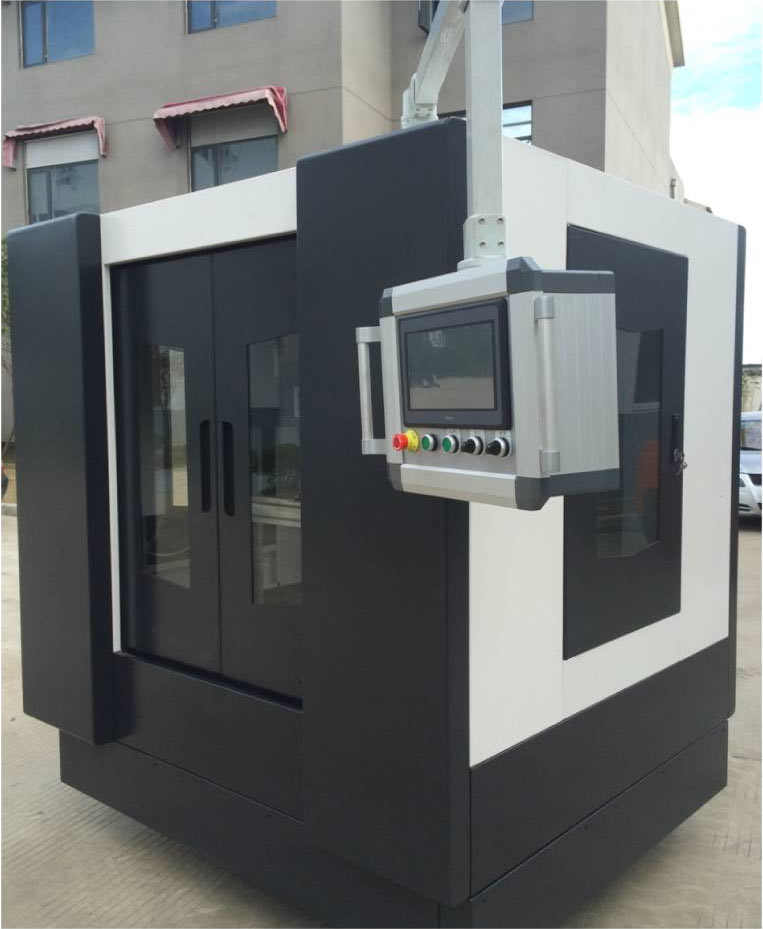
Customer satisfaction is the driving force for our progress and self-improvement. Our goal is to become your promoter of “Industry 4.0”! By choosing a China-based expert like Shenzhen Cora CNC, you are not just buying a machine; you are gaining a partner dedicated to optimizing your production efficiency and precision.
 Cora CNC