CNC machining has revolutionized manufacturing by offering unprecedented precision. According to a report by the National Institute of Standards and Technology (NIST), CNC machines can achieve tolerances of up to ±0.002 inches. This stands in stark contrast to manual machining methods, where variations may be larger due to human factors. This raises the question: what makes CNC machining more precise than manual machining?
Industry expert Dr. Emily Carter, a leading authority on CNC technology, emphasizes the technology's benefits. She states, "CNC machinery eliminates human error, ensuring consistent and repeatable results." This reliability stems from advanced programming and automated processes, which minimize the variability common in manual techniques. Errors from fatigue or miscalculations are essentially removed from the equation.
While CNC machining excels in precision, it also presents challenges. Mastering these machines requires significant training and expertise. Furthermore, initial setup can be time-consuming, a factor that can impact project timelines. Understanding these dynamics is essential for maximizing the gains offered by CNC methods in comparison to traditional manual processes.
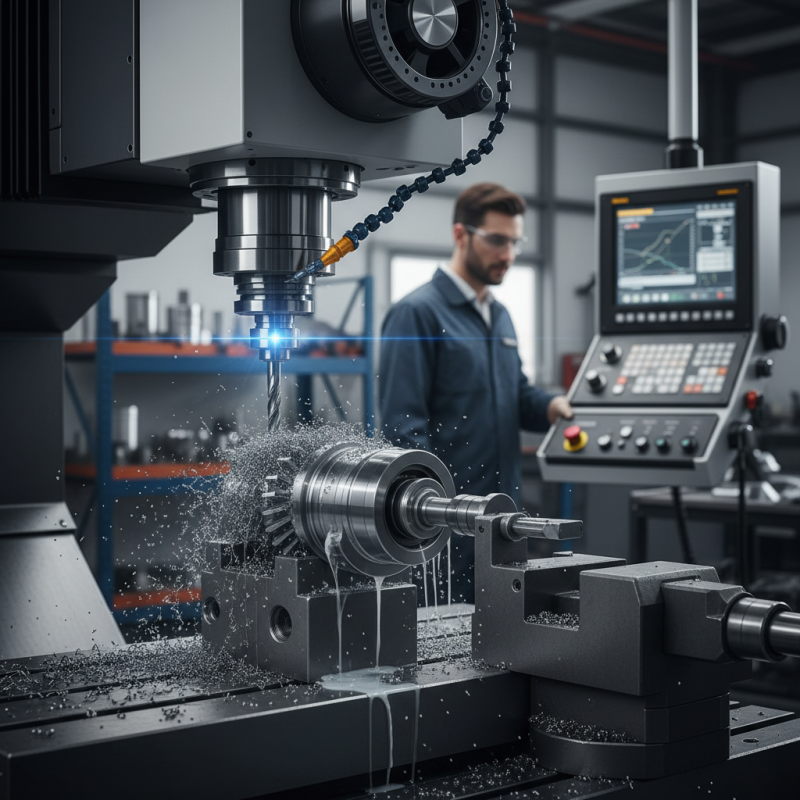
Understanding CNC Machining: A Comparison with Manual Methods
CNC machining stands out for its precision compared to manual methods. In a recent industry report, CNC machines can achieve tolerances of ±0.005 inches. This level of accuracy is challenging to match with manual machining, where human error plays a significant role. Skilled machinists may attain tolerances of ±0.010 inches, but this often depends on the operator's experience and the specific task.
Automation in CNC machining enhances repeatability. Each operation is consistent, unlike manual methods that rely on the operator's skill and focus. Data shows that CNC machines can operate 24/7, thus significantly increasing production rates. However, the initial setup for CNC can be time-consuming. Operators must program and calibrate machines before production begins.
Moreover, learning to program CNC machines requires specialized knowledge. Many operators learn through trade schools or on-the-job training. The skills needed to manually machine components can sometimes be applied to debug CNC issues, but they may not be enough for high-precision tasks. CNC technology has limitations too, such as high upfront costs and software complexities. Balancing the advantages and challenges of both methods is crucial for optimal outcomes.
Precision Comparison: CNC Machining vs. Manual Methods
The bar chart above illustrates the precision difference between CNC machining and manual methods. CNC machining achieves precision levels as fine as 10 micrometers, significantly outperforming the 100 micrometers typical in manual operations.
Key Advantages of CNC Accuracy in Precision Engineering
CNC machining offers several key advantages in precision engineering. One significant benefit is its ability to maintain tight tolerances. In manual methods, variations can arise from human error. Even skilled operators can struggle with consistency. CNC machines, however, program precise movements, reducing the risk of discrepancies. This results in more accurate parts, improving overall production quality.
Another advantage of CNC technology is its repeatability. Once a design is programmed, the machine can produce identical components without variations. This quality is essential in industries like aerospace or medical devices. Even minor deviations can lead to failures. CNC machining ensures that each piece meets exact specifications, enhancing reliability.
However, it's not without flaws. CNC machines require calibration and maintenance. Misalignment can occur if not monitored correctly. Additionally, complex designs may still require manual intervention. Although CNC provides significant precision, human insight remains crucial for overseeing critical processes. Balancing technology with expertise creates the best outcomes in precision engineering.
Industry Standards for Precision: Measuring CNC vs. Manual Techniques
In the realm of precision engineering, CNC machining offers distinct advantages over manual techniques.
According to a recent industry report, CNC machines can achieve tolerances as tight as ±0.001 inches, whereas manual methods typically reach tolerances of ±0.005 inches. This difference is significant in sectors like aerospace and medical devices, where precision is paramount.
CNC machining employs advanced software and automated processes, which reduces human error. Data from the American National Standards Institute indicates that in CNC operations, 70% of errors are mitigated through automation. Manual techniques, while skilled, are more prone to variations due to operator fatigue and inconsistent practices.
Tips for enhancing precision in CNC machining include regular maintenance of the machines and using high-quality materials. Ensuring the software is updated with the latest algorithms can also improve accuracy. Operators should receive ongoing training to stay aware of best practices. Such proactive measures can further bridge the precision gap between CNC and manual methods, but it’s crucial to remain open to the complexities and challenges that arise with both approaches. Balancing technology and skill remains a key consideration in precision production.
Technological Innovations Enhancing CNC Precision in Manufacturing
Technological innovations are revolutionizing CNC machining, bringing extraordinary precision to manufacturing processes. According to a recent report from the International Journal of Advanced Manufacturing Technology, CNC machines can achieve tolerances as tight as ±0.002 mm. This is significantly better than traditional manual methods, often limited to ±0.05 mm. Such advancements reduce waste and improve product quality.
Component size also plays a crucial role. Modern CNC machines can effectively handle intricate designs on varied materials, from metals to plastics. A study by the Precision Machined Products Association (PMPA) noted that 85% of manufacturers now rely on CNC technology for high-precision tasks. They highlight the capability of CNC machines to produce complex geometries consistently, which remains a challenge for manual methods.
However, adopting CNC technology is not without hurdles. Many operators must undergo training to manage complex software and machinery. Additionally, even with sophisticated machines, occasional calibration issues can arise, affecting precision. Industry experts often stress the importance of regular maintenance to mitigate these problems. Balancing advanced technology with skilled labor remains essential for achieving optimal results.
Real-World Case Studies: CNC Machining Accuracy in Practice
CNC machining offers a level of precision that manual methods struggle to match. A case study from a European aerospace company revealed that CNC parts achieved tolerances within ±0.01 mm. In contrast, manual processes often faced variations of ±0.05 mm or more. This discrepancy is critical in industries where precision is paramount.
Another study highlighted a medical device manufacturer. They switched to CNC machining for producing intricate components. The result was a reduction in errors by 70%. While manual techniques relied heavily on human skill, CNC technology utilized programmed designs. Yet, it’s important to note that CNC systems require careful setup. Errors in programming can lead to costly mistakes.
For automotive components, CNC machining has been shown to increase production efficiency by up to 50%. However, the reliance on technology can lead to overconfidence. Operators must remain vigilant. They need a solid understanding of both the machine and the material properties. Relying solely on automation without skillful oversight can create challenges in quality control.
FAQS
: CNC machining achieves tolerances of ±0.005 inches, while manual methods often reach ±0.010 inches.
CNC machines can consistently produce identical components, unlike manual methods which depend on operator skill.
CNC machines can operate 24/7, significantly boosting production rates compared to manual methods.
Initial setup of CNC machines is time-consuming. Operators must program and calibrate before production starts.
Yes, programming CNC machines often requires trade school training or on-the-job experience.
Some manual skills may aid in debugging, but they might not suffice for high-precision CNC tasks.
CNC machines need regular calibration and monitoring to prevent misalignment and ensure accuracy.
Overconfidence in automation can be risky. Skilled oversight is essential for maintaining quality control.
By ensuring every component meets exact specifications, CNC machining minimizes the risk of failures.
They saw a 70% reduction in errors, showcasing CNC's ability to produce intricate components efficiently.
Conclusion
CNC machining has revolutionized precision engineering by offering numerous advantages over traditional manual methods. Key factors that highlight what makes CNC machining more precise than manual machining include computer-controlled operations, which minimize human error and enhance replication accuracy. This technology adheres to strict industry standards, allowing for more consistent measurements compared to manual techniques that are often subject to variability.
Additionally, technological innovations in CNC machinery continually enhance precision, resulting in flawless production runs and optimized workflows. Real-world case studies demonstrate the effectiveness of CNC machining in achieving exceptional accuracy, further solidifying its superiority in various manufacturing applications. As industries evolve, the distinction in precision between CNC and manual methods becomes increasingly clear, establishing CNC machining as the preferred choice for precision engineering.

 Cora CNC