Investing in CNC machines in 2026 requires more than comparing spindle speeds, axis counts, and advertised discounts. Manufacturers must connect equipment decisions to actual production needs. A five-axis machine may look impressive on a showroom floor, yet remain underused if the business mainly produces simple aluminum brackets. What to consider before investing in cnc machines begins with part geometry, annual volumes, tolerance requirements, available operators, and expected payback.
Industry data supports a careful approach. Deloitte’s 2024 Global Smart Manufacturing Survey reported that 86% of manufacturing executives view smart manufacturing as a major competitiveness driver within five years. However, digital capability does not automatically create profit. The International Federation of Robotics reported 541,302 industrial robot installations worldwide in 2023, showing strong automation momentum, but CNC investment still depends on workflow design and workforce readiness.
CNC educator Mike Lynch offers a practical warning: “The machine is only one part of the CNC system.” That principle matters in 2026. Buyers should examine tooling costs, software subscriptions, inspection equipment, maintenance response times, training, and energy consumption. A machine without reliable programming and quality control can become an expensive metal cabinet.
Consider the morning shift. If an operator spends forty minutes searching for tools, production capacity disappears quietly. If inspection happens only at the end, one setup error can spoil an entire batch. These details rarely appear in glossy brochures.
The uncomfortable truth is that forecasts can be wrong. Demand may soften. Skilled labor may leave. A cheaper machine may deliver better returns than a smarter one. Careful investors should model conservative utilization, test sample parts, and question every optimistic assumption before signing a purchase order.
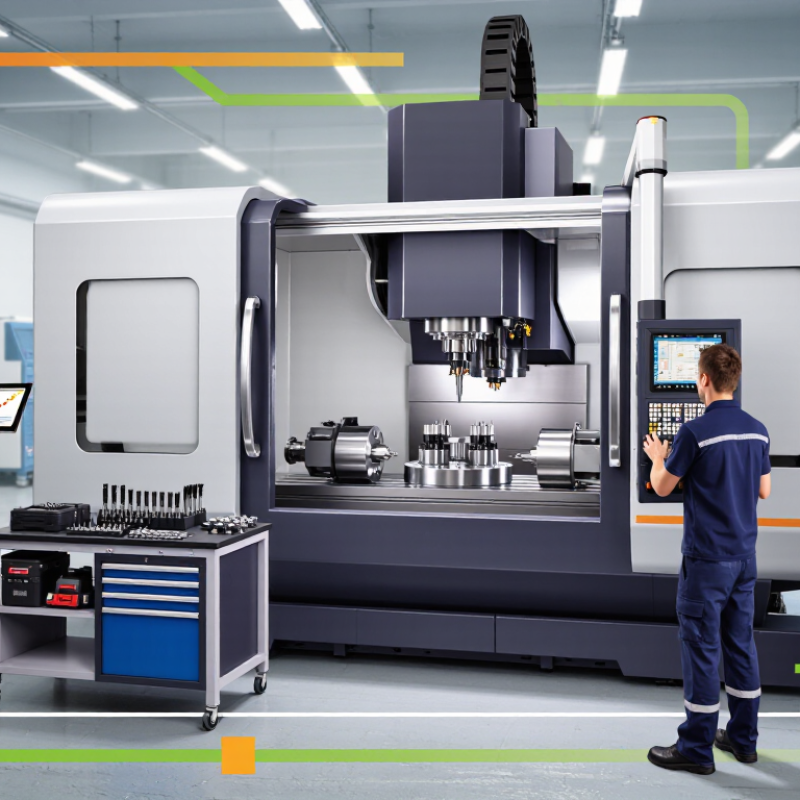
Investing in CNC equipment in 2026 starts with demand mapping, not catalog browsing. Grand View Research (GVR) forecasts a 10.3% compound annual growth rate for the CNC machine market. That pace signals expanding capacity needs, but it does not guarantee equal demand across regions or machine types. A forecast is not a purchase order.
Turning centers fit repeat cylindrical work, while vertical machining centers suit diverse milling jobs. Horizontal centers can improve chip evacuation in heavier production. Five-axis systems reduce setups for complex aerospace, medical, and energy components. Wire and sinker EDM machines serve hard materials and intricate cavities. Match the machine to tolerance, spindle load, cycle time, and operator skill. Start smaller.
A 2024 smart manufacturing survey reported that 86% of manufacturers view smart factory initiatives as major competitiveness drivers within three years. This supports spending on probing, tool monitoring, and data connectivity, not merely faster spindles. Yet integration costs are easy to underestimate. Budget for fixturing, coolant management, maintenance, training, and floor space. Compare total cost per good part over five years. I would test a representative batch before committing. Real cycle data can challenge an attractive spreadsheet.
How to Invest in CNC Machines in 2026: What to Consider?
Set clear capacity, tolerance, and utilization targets before comparing CNC equipment. A machine should solve a measured production problem, not simply appear technically impressive. Review the last twelve months of orders, including batch sizes, material types, setup times, and delivery delays. Measure reality. If monthly demand reaches 1,200 parts, calculate effective cutting hours rather than dividing demand by advertised speed. Include programming, tooling changes, inspection, maintenance, and operator breaks. A practical capacity target might require 70% scheduled availability, leaving room for urgent work and unexpected downtime.
Tolerance targets need equal attention. Separate critical dimensions from cosmetic features and record actual inspection results. A part requiring ±0.01 mm may demand controlled temperature, stable workholding, and a disciplined measurement process. Tighter capability can increase costs sharply. Do not specify extreme precision without evidence that customers will pay for it. That mistake is common.
Utilization should reflect the whole workflow. Estimate annual spindle hours, average setup duration, idle periods, and the number of trained operators available per shift. Request sample machining trials using similar materials and geometry. Check cycle-time data against your own conditions. Keep the test records. Then compare purchase price, tooling, maintenance, training, energy, and financing costs over several years. My own planning has sometimes overestimated utilization because weekends looked available on paper. Real staffing changed that result. Review assumptions with production, quality, and finance teams before committing capital.
Investing in a CNC machine in 2026 requires more than comparing purchase prices. Calculate total ownership cost over five years. Include installation, tooling, training, software, maintenance, energy, financing, floor preparation, and operator time. A machine priced at $180,000 may require another $36,000 before production begins. Add $16,500 in yearly maintenance, energy, and software expenses, and five-year ownership reaches approximately $298,500.
Energy deserves closer attention. The U.S. Department of Energy reports that compressed-air systems can waste 20% to 30% of their energy through leaks and poor controls. A simple leak survey may reduce operating costs before buying new equipment. Do not ignore tooling. Worn inserts can quietly reduce accuracy, increase scrap, and extend cycle times. The cheapest machine can become expensive quickly.
Estimate annual benefits from usable production hours, reduced scrap, lower labor requirements, and avoided outsourcing. Suppose the machine creates $92,000 in yearly gross benefit. After $16,500 in operating costs, the net benefit is $75,500. A $216,000 initial investment then produces a simple payback of about 2.9 years. Deloitte’s 2024 Smart Manufacturing and Operations Survey found that 92% of manufacturers view smart manufacturing as a major competitiveness driver. Connectivity may support that return, but only when data improves scheduling or quality decisions. My calculation would still include a 10% contingency. Real factories are rarely as clean as spreadsheets.
Five-year planning benchmarks show why the purchase price is only one part of a CNC investment. Installation, tooling, maintenance, energy, downtime, and resale value can materially change the payback period.
Method: Values are shown in USD thousands and represent realistic planning assumptions for commonly purchased CNC machine categories. Total ownership cost includes acquisition, installation and training, tooling, maintenance, energy, downtime allowance, and estimated resale value after five years. Payback is based on expected annual contribution margin from additional productive capacity.
Investing in CNC machines in 2026 should begin with automation ROI, not machine specifications. An industry survey reports that 86% of manufacturers prioritize smart manufacturing. This reflects a practical shift toward connected equipment, real-time monitoring, and fewer manual decisions. However, a connected machine is not automatically a profitable machine. Start with the bottleneck.
Measure current cycle time, scrap rates, changeover delays, and operator hours. Then compare those figures with the expected gains from robotic loading, tool monitoring, or automated inspection. A useful calculation includes purchase price, installation, training, maintenance, software, and energy consumption. For example, reducing a ten-minute changeover across three daily shifts may create more value than adding maximum spindle speed. Small gains accumulate.
My first ROI estimate was too optimistic because it ignored programming delays and inconsistent material quality. That mistake matters. Pilot the system on a repeatable part before expanding automation across the workshop. Track uptime, first-pass yield, labor redeployment, and unplanned service calls for at least three months. Ask whether existing staff can interpret production data and correct problems safely. Data quality is often weaker than expected. Include cybersecurity controls, access permissions, and backup procedures in the investment plan. A machine that produces faster but generates unreliable records can weaken operational decisions.
Supplier screening should begin with evidence, not polished demonstrations.
Ask for a documented risk assessment under ISO 12100 and safety-control validation aligned with ISO 13849-1. Electrical systems should also reflect IEC 60204-1 requirements.
During acceptance testing, check emergency stops, guarding, chip containment, spindle noise, coolant leaks, and ballscrew backlash. Small defects become expensive later.
AMT’s U.S. Manufacturing Technology Orders report recorded approximately 25,000 unit orders in 2023, showing that demand remains significant but cyclical. That makes supplier stability and service capacity important.
Financing decisions need a wider calculation.
Include installation, operator training, tooling, software, maintenance, energy, and production downtime. The Federal Reserve’s 2024 Small Business Credit Survey found that many firms faced higher borrowing costs and tighter approval conditions.
A low monthly payment can hide a costly total. Request fixed-rate options, prepayment terms, warranty limits, and spare-parts availability in writing.
I would also compare two financing offers using the same expected utilization. Otherwise, the comparison is misleading.
Resale value depends on documentation and machine relevance.
Keep service records, calibration reports, software licenses, and original manuals. Standard tooling usually attracts more buyers than highly customized fixtures.
The 2024 Global Machine Tool Outlook from Oxford Economics highlights continued pressure from changing industrial demand and investment cycles. Older controls may lose value quickly.
I would reserve a replacement budget, even when the machine appears reliable.
Forecasts can be wrong. That is part of the risk.
Define monthly demand, material types, batch sizes, tolerances, and expected machine usage. Measure reality. Include programming, setup, inspection, maintenance, and operator breaks. A practical target may use 70% scheduled availability.
Convert demand into effective cutting hours, not advertised cycle speed. Request sample trials using similar materials and part shapes. Compare recorded cycle times with your factory conditions. Keep test records.
Separate critical dimensions from cosmetic features. A ±0.01 mm requirement may need temperature control, stable workholding, and disciplined inspection. Do not pay for extreme precision without clear customer value.
Include installation, floor preparation, tooling, training, software, maintenance, energy, financing, and operator time. A $180,000 machine may need $36,000 before production starts. Small expenses accumulate quickly.
Estimate usable production hours, reduced scrap, labor savings, and avoided outsourcing. Subtract yearly operating costs from annual gross benefits. A $216,000 investment with $75,500 annual net benefit has about a 2.9-year payback. Add a contingency. Spreadsheets can be optimistic.
Check compressed-air leaks before purchasing new equipment. Leaks and poor controls may waste 20% to 30% of compressed-air energy. Inspect inserts regularly. Worn tooling can increase scrap, cycle time, and dimensional errors.
Test emergency stops, guarding, chip containment, spindle noise, coolant leaks, and ballscrew backlash. Request documented safety-risk reviews and control validation. Small defects become expensive later. Check service capacity, not only demonstrations.
Use the same expected utilization for every offer. Compare total repayment, installation costs, training, downtime, maintenance, and energy. Ask for fixed-rate terms, prepayment conditions, warranty limits, and spare-parts availability in writing. Low payments can mislead.
Keep service records, calibration reports, software documents, and original manuals. Standard tooling may attract more buyers than customized fixtures. Older controls can lose value quickly. Reserve replacement funds. Forecasts fail.
Investing in CNC machines in 2026 requires a structured evaluation of production needs, market demand, and long-term business goals. Start by comparing CNC types according to the materials, part sizes, complexity, accuracy, and expected production volume. Industry growth is projected at a 10.3% CAGR, but demand alone should not determine a purchase. Define capacity, tolerance, operating hours, and utilization targets before selecting equipment. This approach helps prevent overinvestment in machines that exceed actual requirements or underperformance caused by limited capability.
A complete financial review should include purchase price, installation, tooling, maintenance, energy, labor, training, software, downtime, and eventual resale value. Consider automation by measuring labor savings, throughput improvements, quality gains, and payback time, especially as 86% of manufacturers prioritize smart manufacturing. Finally, assess supplier reliability, technical support, safety compliance, financing terms, upgrade options, and resale risks. Understanding what to consider before investing in cnc machines can help businesses choose equipment that improves productivity while supporting sustainable returns.

Cora CNC