In today’s fast-paced manufacturing landscape, the significance of CNC machines cannot be overstated. The question remains: why CNC machines are essential in modern factories? These machines are transforming traditional manufacturing processes. They enhance precision while minimizing human error. Factories using CNC technology can produce complex parts with incredible accuracy.
Moreover, CNC machines boost production efficiency. They operate continuously, which can lead to higher output levels. This shift allows companies to meet demanding deadlines and customer requirements with ease. The adaptability of CNC machines also plays a crucial role in modern manufacturing. They can be programmed for varied tasks, catering to diverse production needs.
However, embracing CNC technology is not without challenges. Initial costs and the need for skilled operators can be hurdles. Despite this, the benefits clearly demonstrate their essential role. As industries evolve, the importance of CNC machines in driving innovation and efficiency is undeniable. Understanding these factors highlights the ongoing revolution in factories around the globe.
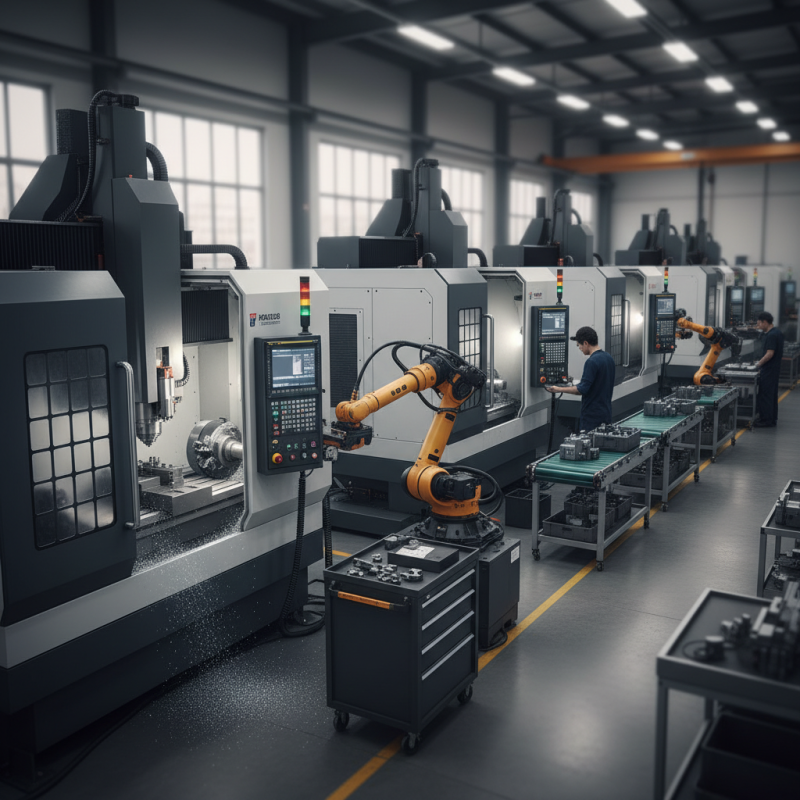
The evolution of CNC machines has significantly impacted modern manufacturing. Early machines were simple and limited in capability. Today, they are complex, precise, and adaptable. The transition from manual to automated processes has transformed factory workflows. CNC machines can perform intricate tasks with speed and consistency.
These machines enable manufacturers to produce high-quality parts with minimal human intervention. With advanced software, factories can optimize their operations. However, there is a need for continuous training and adaptation. As technology advances, relying solely on machines could lead to skill gaps in the workforce. This shift demands a careful balance between automation and human oversight.
Modern CNC technology emphasizes customization and efficiency. Factories can now respond rapidly to market demands. Despite these advancements, challenges remain. Maintenance and software updates are crucial for optimal performance. Striking a balance between innovation and practicality is essential for long-term success in manufacturing.
CNC machines are changing how factories operate. Enhanced precision is one of their key contributions. These machines can achieve tight tolerances, which means parts fit perfectly. This level of precision reduces waste and scrap rates. It is crucial in industries like aerospace and healthcare, where even minor errors can lead to significant issues.
Consider a scenario where a part needs to mesh with another component. CNC machines create shapes and dimensions that match specific requirements. This accuracy ensures reliability in operation. However, not every factory has adopted these technologies, leading to variable quality in products. Companies must invest in training and maintenance to fully realize these benefits.
Yet, achieving perfect precision isn't straightforward. Programming errors can still occur, affecting output quality. Regular calibration and adjustments are essential to maintaining standards. Factories must be ready to learn from mistakes and continuously improve their processes. Utilizing CNC technology requires commitment and an understanding of potential challenges.
CNC technology has transformed manufacturing through substantial improvements in production speed. Factories using CNC machines report an average increase in efficiency of 30-50%. This leap makes a significant difference. Workers can focus on higher-level tasks, rather than monotonous manual work.
One interesting aspect is the precision these machines offer. A CNC machine can produce parts with tolerances as tight as 0.0001 inches. This mitigates waste and reduces the need for time-consuming rework. However, integrating this technology raises challenges. Not all staff are initially skilled in operating CNC systems. Training and adaptation take time, which can slightly hinder immediate progress.
Moreover, data shows that downtime is critical. Regular maintenance is essential to keep CNC machines running at peak efficiency. Neglecting this can lead to costly production halts. Balancing machine use and maintenance is an ongoing challenge for many factories. These factors illustrate that while CNC machines boost efficiency, they also require thoughtful management and continuous improvement.
CNC machines have transformed the manufacturing landscape significantly. One major advantage is their cost-effectiveness. By automating processes, factories can dramatically reduce labor costs. With fewer employees needed for manual tasks, businesses can allocate resources more efficiently. This shift allows for a leaner workforce focused on quality control and design innovation.
In addition to labor savings, CNC machines minimize waste. They ensure precise cuts and measurements, which means less material ends up in the scrap pile. Traditional methods often lead to excess waste due to human error. CNC technology helps maintain high accuracy, ultimately saving materials and money. However, implementing CNC systems requires careful planning and training. Employees may need time to adapt to this new technology.
Factories should also reflect on the initial investment in CNC equipment. It might seem daunting at first glance. Yet, over time, the return on investment often justifies the upfront costs. The key lies in balancing modernization with the current workforce's capabilities and ensuring a smooth transition. Embracing this change can yield significant long-term benefits, transforming a factory's efficiency and sustainability.
CNC machines have become game-changers in modern manufacturing due to their versatility. They can handle a variety of materials, including metals, plastics, and wood. This adaptability allows factories to produce an extensive range of products. According to a report by the International Federation of Robotics, CNC machines improve production efficiency by up to 30%. However, not all plants leverage this technology to its fullest potential.
The ability of CNC machines to be reprogrammed for different tasks is crucial. This flexibility helps manufacturers respond quickly to market changes. A survey conducted by MarketsandMarkets indicates that the demand for flexible manufacturing systems is expected to grow significantly, reflecting the industry's shift towards customization. Yet, some companies struggle with integration challenges and may not fully exploit the capabilities of CNC technology.
Moreover, the initial investment can be daunting for small businesses. Many hesitate to adopt CNC machines and miss out on potential cost savings and productivity boosts. While the long-term benefits are substantial, short-term obstacles can create hesitation. Thus, understanding these dynamics is essential for manufacturers looking to enhance their operations.
: CNC technology can improve manufacturing efficiency by 30-50%. This significantly speeds up production processes.
CNC machines can produce parts within tolerances as tight as 0.0001 inches, reducing waste and rework.
Not all staff are skilled in operating CNC machines initially. Training can take time, causing delays.
Regular maintenance keeps machines running efficiently. Neglecting it can lead to costly downtime in production.
CNC machines can work with metals, plastics, and wood, allowing for diverse product creation.
CNC machines can be reprogrammed for different tasks, helping companies quickly adapt to market changes.
The initial investment in CNC machines can be high. This may cause some small businesses to hesitate.
Integration challenges can slow down the adoption of CNC technology, limiting its full potential.
Increased demand for customization pushes manufacturers to adopt CNC technologies more widely.
Factories must balance machine usage and maintenance while striving for continuous improvement.
CNC machines have become a cornerstone of modern manufacturing, fundamentally transforming production processes. The evolution of these machines has led to enhanced precision, enabling manufacturers to achieve tight tolerances that were previously unattainable. Moreover, the increased efficiency provided by CNC technology has significantly improved production speeds, allowing for higher output with reduced turnaround times.
Cost-effectiveness is another critical aspect, as CNC machines minimize labor costs and reduce waste through automation. Their versatility allows manufacturers to adapt to a diverse range of production needs, making them indispensable. Ultimately, these factors underscore why CNC machines are essential in modern factories, as they drive innovation and efficiency in an increasingly competitive industrial landscape.

Cora CNC