Investing in CNC machines can be a pivotal decision for your business. It promises efficiency, precision, and cost-effectiveness. However, many overlook critical aspects. Understanding what to consider before investing in CNC machines is essential. It goes beyond just price; features, maintenance, and support matter too.
When selecting CNC machines, think about your production needs. Are you focusing on small batches or large-scale production? The machine's capabilities should align with your goals. Reliability is also a key factor; a breakdown can lead to significant losses.
Don’t forget to assess the total cost of ownership. This includes not only the purchase price but also operating costs and maintenance. It’s worth reflecting on whether you have the expertise to operate these machines effectively. Being detailed in your considerations will ultimately lead to a more informed investment decision.
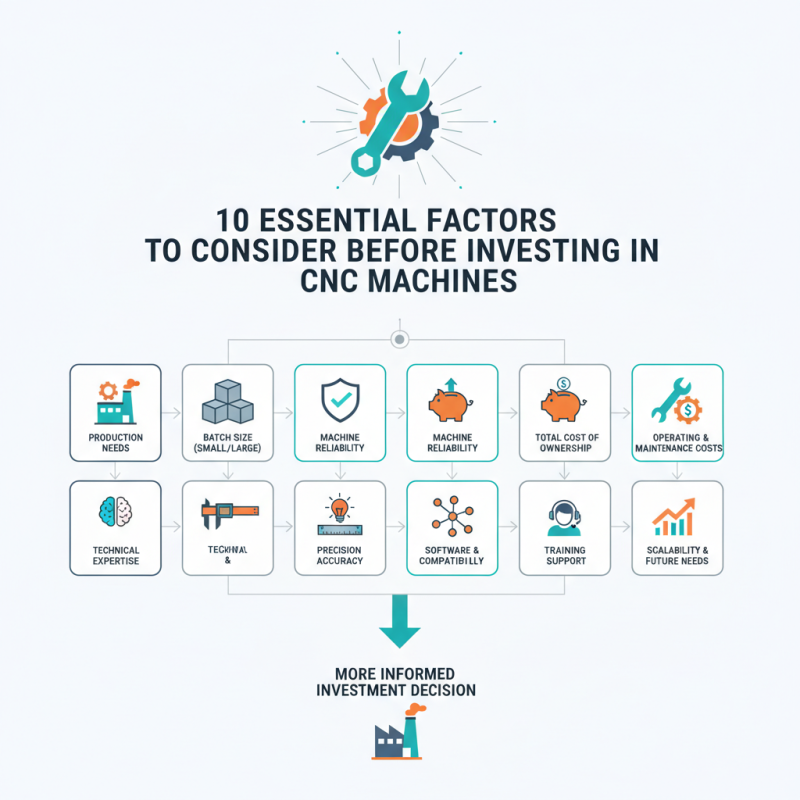
When selecting CNC machines, various critical factors must be evaluated to ensure the right choice. The machine's type plays a significant role. For instance, turning machines are ideal for cylindrical parts, while milling machines excel in flat or complex designs. According to industry reports, 85% of manufacturers prioritize machine versatility for different applications.
Another essential factor is precision. High precision is often crucial in industries such as aerospace or automotive, where tolerances can be as tight as ±0.005 mm. However, obtaining such precision usually demands advanced technology, which can increase costs significantly. It's essential to balance the required precision with the budget constraints, as 40% of businesses report complications from overspending on capabilities they seldom use.
Maintenance and support services are also vital considerations. Many CNC machines require specialized knowledge for upkeep. Reports show that inadequate maintenance can lead to costly downtime—averaging up to 20% in lost productivity. Therefore, evaluating the availability of tech support and training is essential before making an investment. Understanding these factors helps navigate the complexities of CNC machine selection, leading to informed decisions that align with operational goals.
| Factor | Description | Importance Level |
|---|---|---|
| Machine Type | Choosing between types such as CNC milling, CNC turning, or CNC laser. | High |
| Material Compatibility | Ensure the machine can handle the materials you intend to work with. | High |
| Budget | Consider initial purchase cost and ongoing maintenance expenses. | Critical |
| Precision and Accuracy | The machine’s ability to maintain tight tolerances in production. | Very High |
| Size and Footprint | Ensure the machine fits within your workspace and production line. | Medium |
| Ease of Use | User-friendly controls and software can streamline operations. | High |
| Support and Training | Check availability of manufacturer training and customer service support. | Important |
| Technology and Features | Assess additional features such as automation and advanced features. | Medium |
| Warranty and Guarantees | Understand warranty coverage and service guarantees offered. | Important |
| Market Trends | Stay aware of industry trends that may influence machine performance and needs. | Medium |
: Technical specifications determine machine performance. Rigidity and stability impact precision and product quality.
Speed affects operation quality. Too fast can lead to errors during production.
A friendly interface boosts efficiency. However, new systems may require time to learn.
Different machines suit different materials. Choose one that meets current and future material needs.
A reputable supplier usually offers quality machinery. They may also provide better service support.
Consider their response times, after-sales support, and service packages for parts replacement and assistance.
Reflecting on previous supplier interactions can guide you toward better choices in future purchases.
Select a versatile machine. This option can save money and meet diverse production needs.
Research current users' experiences. Their insights can reveal the supplier's reliability and service quality.
Lack of support can lead to breakdowns and costly downtimes. Timely assistance is crucial for efficiency.
When contemplating what to consider before investing in CNC machines, several essential factors come into play. It’s crucial to understand the various types of CNC machines and their specific applications to ensure that the selected equipment aligns with production needs. Additionally, evaluating the financial implications, including initial costs and potential return on investment (ROI), can significantly impact the decision-making process.
Technical specifications are also vital for achieving optimal performance, as they dictate the machine’s capabilities in relation to desired outcomes. Furthermore, considering the supplier's reputation and the level of service support they provide can influence the long-term success of the investment. By thoroughly assessing these factors, businesses can make informed decisions that enhance their operational efficiency and capacity.

 Cora CNC