China’s machine-tool industry is entering a practical digital transition. The change is visible on factory floors, not only in strategy reports. Sensors now track spindle vibration, cutting temperature, tool wear, and energy use. A connected CNC machine can send production data to a manufacturing execution system within seconds. This creates a clearer picture of how digital manufacturing changes machine tool operations.
Dr. Henrik von Scheel, widely recognized as a founder of the Industry 4.0 concept, has said, “Industry 4.0 is not about technology; it is about people, processes, and technology.” His observation matters for China’s top machine-tool producers. A five-axis machining center may achieve tighter control when software identifies tool wear before a surface defect appears. Operators can compare cycle times, inspect alarms, and adjust parameters from a central dashboard. Maintenance teams can replace a bearing before unexpected downtime stops an entire production line.
The progress is not flawless. Some workshops still depend on spreadsheets, manual inspections, and isolated machines. That gap is important. Digital manufacturing does not automatically create better products. Poor data can produce confident but wrong decisions. Cybersecurity, worker training, system compatibility, and long-term maintenance also require attention. A factory may install smart sensors yet gain little operational value. The strongest manufacturers will connect engineering knowledge with reliable data and experienced judgment. China’s leading machine-tool companies therefore face a broader challenge: they must improve equipment, software, and human capability together. The transformation is substantial, but still unfinished.
China’s Machine Tool Industry Before Digital Manufacturing
Before digital manufacturing reshaped China’s machine tool sector, many workshops depended on conventional lathes, milling machines, and grinders. Operators adjusted handwheels, read mechanical scales, and checked dimensions with calipers or micrometers. Skill lived in the operator’s hands. A small correction could prevent a full batch from failing.
During the planned industrial era, large state-owned factories provided much of the sector’s capacity. Production focused on volume, equipment availability, and national industrial needs. Standardization existed, but it was often uneven between regions and factories. Older machines could remain useful for decades, even when accuracy declined. Maintenance teams repaired worn lead screws, replaced bearings, and improvised when imported components were difficult to obtain. The work was practical. Not always elegant.
Quality depended heavily on people.
Drawings were printed, process sheets were carried across the workshop, and inspection happened at selected stages. Data rarely moved continuously from the machine to management. Delays, repeated adjustments, and material waste were common. It is easy to judge this system by today’s standards, but that would be incomplete. Technicians learned to understand vibration, cutting heat, tool wear, and operator judgment without automated dashboards. That experience created valuable industrial knowledge, although inconsistent records sometimes made it difficult to repeat the same quality across different factories.
Core Digital Technologies Reshaping Machine Tool Production
Digital manufacturing is changing how China’s machine tools are designed, built, and tested. Core digital technologies now connect CNC systems, industrial sensors, edge computing, and production software. A sensor can detect spindle vibration before a visible defect appears. Engineers then adjust cutting speed, tool pressure, or cooling flow with less delay.
The scale is significant. The International Federation of Robotics reported 276,288 industrial robot installations in China in 2023, representing about 51% of global installations. This growth supports automated loading, inspection, and material handling around machine tools. Deloitte’s 2023 Smart Manufacturing and Operations Survey also found that 86% of manufacturers viewed smart manufacturing as important for competitiveness. These figures show momentum, but not complete success.
Digital twins are becoming practical on the factory floor. They can simulate thermal movement, tool wear, and energy use before physical trials begin. Artificial intelligence can compare thousands of machining records and identify unstable patterns. However, a digital twin can still be wrong when its data is incomplete. This is where many projects stumble. Small workshops may lack clean historical data, skilled analysts, or compatible equipment. Cybersecurity also needs daily attention, not occasional testing. The strongest production teams combine algorithms with experienced machinists, because a strange vibration may mean more than a dashboard warning.
How Smart Factories Improve Machine Tool Design and Manufacturing
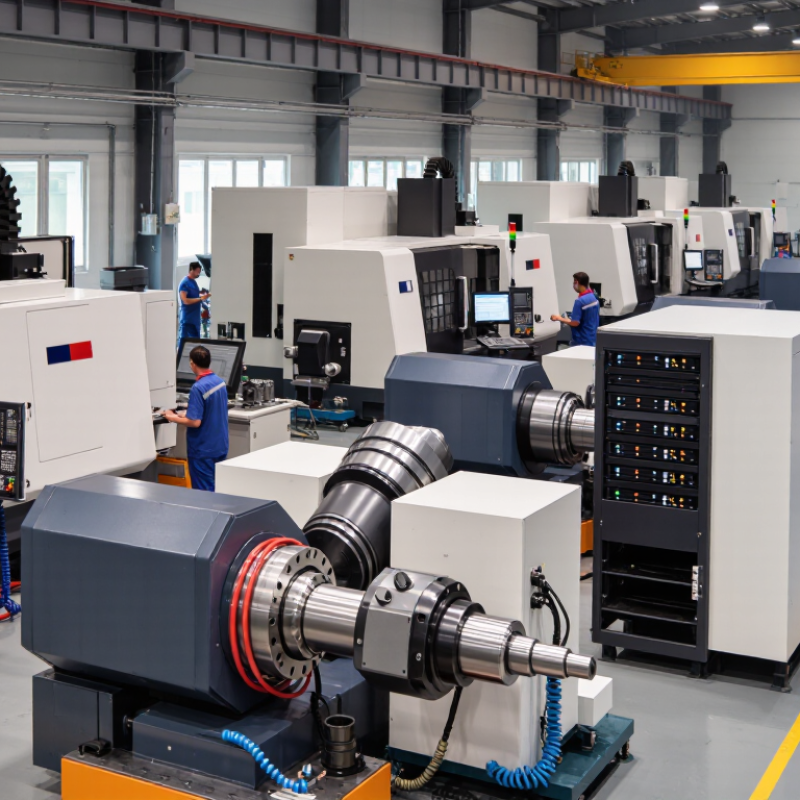
Smart factories are changing how machine tools are designed and manufactured in China. Sensors now record spindle vibration, cutting temperature, tool wear, and energy use during production. Engineers can review these signals before a small fault becomes a costly failure. This shortens testing cycles and improves design decisions. The factory becomes part of the engineering team.
Digital models also connect design data with workshop feedback. A designer can adjust a guide rail after seeing repeated vibration near a specific speed. Operators can compare machining results on screens beside the production line. This practical feedback helps improve accuracy, maintenance access, and operator safety. It is useful evidence, not just a polished simulation.
Automation has limits. Data may be incomplete, sensors may drift, and software can repeat a wrong assumption quickly. A skilled technician still checks unusual noise, surface marks, and temperature changes by hand. That human judgment matters. In one realistic trial, a machine met its accuracy target but consumed more energy than expected. Engineers had to revise the cooling system and cutting strategy. Smart manufacturing is therefore an ongoing process, shaped by measurements, experience, and honest review.
How Digital Manufacturing Changes China’s Machine-Tool Industry
Typical improvement ranges reported in public smart-manufacturing and industrial automation studies
Smart factories improve machine-tool design and manufacturing by connecting CAD/CAM systems, CNC equipment,
production planning, sensors, and quality-control data. The aggregated benchmark ranges indicate shorter
engineering and production cycles, faster machine setup, higher first-pass quality, and lower energy use per part.
Data basis: aggregated ranges commonly reported in public smart-manufacturing assessments by international industrial
organizations and manufacturing research institutions; values represent typical percentage changes rather than company-specific results.
Effects on Precision, Efficiency, Customization, and Workforce Skills
How Digital Manufacturing Changes China’s Top Machine Tools?
Digital manufacturing is reshaping China’s high-end machine-tool sector from the shop floor upward. In a precision workshop, connected controls record spindle temperature, vibration, tool wear, and cycle time. This evidence helps engineers identify drift before a finished part fails inspection. It makes precision more repeatable, not automatically perfect. Thermal changes still matter.
Production efficiency improves when scheduling, maintenance, and quality data share one workflow. A machine can signal an approaching tool change during an overnight run. Technicians then prepare the replacement before stoppage occurs. Shorter setup routines also reduce idle minutes between batches. Yet poor data entry can distort the entire plan. Digital systems amplify discipline, including bad discipline.
Customization is becoming more practical for smaller production orders. Engineers can adjust cutting parameters, fixture settings, and inspection routines using validated digital models. A tailored component may move from design review to machining with fewer manual handoffs. This demands stronger workforce skills. Operators need machining judgment, measurement knowledge, and basic data literacy. They must question abnormal readings, not simply follow screens. In my experience, the best results come from teams combining practical experience with statistical process control. Training remains uneven. That weakness deserves honest attention.
Future Development of China’s Digitally Connected Machine Tools
How Digital Manufacturing Changes China Top Machine Tools?
Future Development of China’s Digitally Connected Machine Tools
China’s next machine-tool advantage will not come from connectivity alone. It will come from machines that learn from verified production data. The International Federation of Robotics reported 276,288 industrial robots installed in China during 2023, representing 51% of global installations. This scale supports a digital ecosystem around CNC equipment, sensors, controllers, and factory networks. In practice, a connected machining center can stream spindle vibration, coolant temperature, tool wear, and cycle time. Engineers can adjust feeds before a worn tool damages a precision surface.
Future development will depend on interoperability and trustworthy data. OPC UA, edge computing, and digital twins can connect older equipment with newer production cells. Deloitte’s 2024 Smart Manufacturing and Operations Survey found that 86% of manufacturing leaders expect smart manufacturing to drive competitiveness within five years. That expectation is ambitious. Many workshops still record maintenance events by hand. Some collect millions of readings without consistent labels. The data looks rich, but decisions remain weak.
China’s top machine tools should evolve toward explainable, serviceable intelligence. A local edge gateway could flag abnormal vibration within seconds, while a digital model tests cutting changes before production. Cybersecurity, calibration, and worker training must develop together. Technology alone is insufficient. Factories may purchase dashboards before fixing data discipline. That mistake is expensive. The strongest systems will combine adaptive control with experienced machinists, clear audit trails, and measurable energy performance. Progress will be uneven, and that is worth admitting.
FAQS
Workshops used conventional lathes, milling machines, and grinders. Operators adjusted handwheels and checked dimensions with calipers or micrometers. Skill lived in their hands.
Maintenance teams repaired lead screws, replaced bearings, and improvised unavailable components. Some machines remained useful for decades. The repairs were practical, but not always elegant.
Standards were uneven across regions and facilities. Drawings and process sheets moved by hand. Inspection happened at selected stages, so problems could remain hidden.
Connected controls, industrial sensors, edge computing, and production software now share information. Sensors can detect spindle vibration before visible defects appear. The change is substantial.
Sensors monitor temperature, vibration, tool wear, and cycle time. Engineers can adjust cutting speed, tool pressure, or cooling flow sooner. Precision becomes more repeatable, not automatically perfect.
Digital twins simulate thermal movement, tool wear, and energy use before physical trials. They can reduce repeated testing and reveal unstable conditions. Their predictions fail when data is incomplete.
Automated systems support loading, inspection, and material handling. A machine may signal tool wear during an overnight run. Technicians can prepare replacements before production stops.
Workers need machining judgment, measurement knowledge, and basic data literacy. They must question abnormal readings instead of trusting every screen. Training remains uneven.
It helps smaller production orders move through design, machining, and inspection with fewer manual handoffs. Engineers can adjust cutting parameters and fixture settings. The process still needs careful validation.
Small workshops may lack clean records, compatible equipment, or skilled analysts. Poor data entry can distort scheduling and maintenance decisions. Cybersecurity also requires daily attention.
Conclusion
China’s machine tool industry is entering a new stage as digital manufacturing replaces fragmented, labor-intensive production with connected, data-driven processes. Before this transformation, many manufacturers relied on conventional equipment, manual inspections, and limited production visibility, which could restrict precision, efficiency, and flexible customization. Today, technologies such as industrial sensors, automation, cloud platforms, artificial intelligence, digital twins, and real-time data analysis are reshaping machine tool design and manufacturing. These tools help producers monitor equipment conditions, optimize workflows, identify quality issues earlier, and shorten development cycles.
Smart factories also explain how digital manufacturing changes machine tool operations by linking design, production, inspection, and maintenance into a more coordinated system. As a result, machine tools can achieve greater accuracy, improved energy and material efficiency, faster customization, and more reliable performance. At the same time, workers must develop stronger skills in software, data interpretation, automation, and system management. Looking ahead, China’s digitally connected machine tools are expected to become more intelligent, adaptable, collaborative, and capable of supporting efficient, high-quality manufacturing.

 Cora CNC