In the era of Industry 4.0, the integration of advanced technologies reshapes manufacturing landscapes. At the forefront of this transformation are CNC machines. These tools have evolved beyond simple manufacturing devices; they are now central to smart factories. Understanding what role CNC machines play in Industry 4.0 is crucial for businesses aiming to enhance efficiency and innovation.
CNC machines facilitate remarkable precision and automation. Their capabilities enable manufacturers to respond quickly to market changes. However, their integration into broader systems is not without challenges. Companies must ensure that the data generated by these machines is analyzed effectively. Poor data management can lead to missed opportunities.
As CNC machines drive innovation, it’s important to recognize their limitations. Overreliance on automation can stifle creativity and problem-solving. Striking a balance between technology and human insight will define the next wave of industrial evolution. Addressing these complexities is essential for harnessing the full potential of CNC technology in a rapidly changing environment.
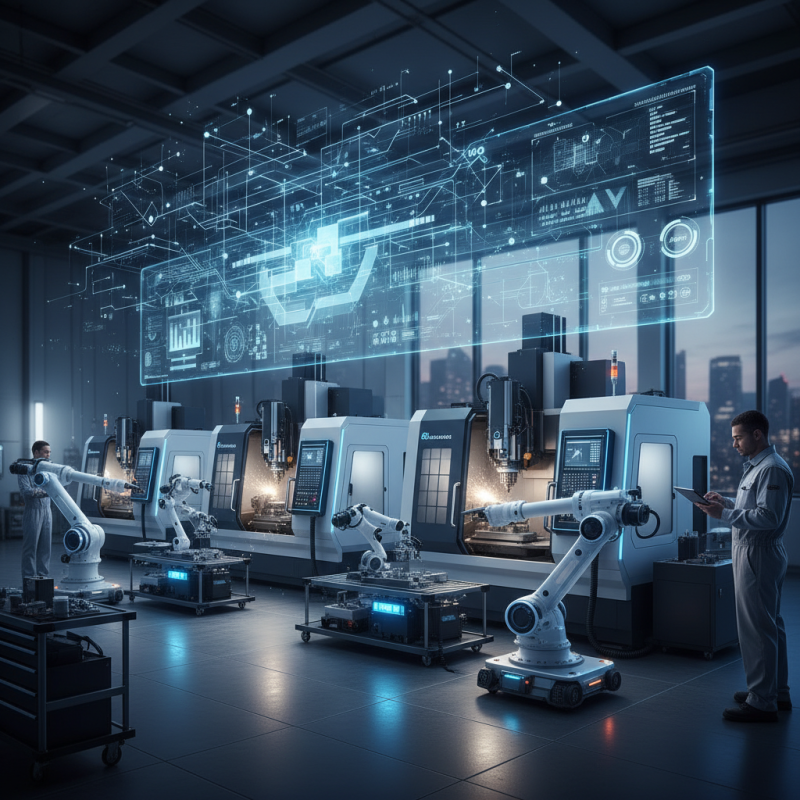
The Role of CNC Machines in Industry 4.0 Transformation
CNC machines play a pivotal role in the transformation of Industry 4.0. Their integration into smart manufacturing systems enhances productivity and efficiency. According to a report from the International Federation of Robotics, CNC machinery and automation technologies improve manufacturing productivity by up to 30%. This impressive gain showcases their significance in modern industrial processes.
Real-time data collection and analysis are key elements of Industry 4.0. CNC machines equipped with IoT sensors provide valuable insights into operational performance. These insights help manufacturers make informed decisions, minimizing downtime and waste. A study from Deloitte indicates that smart manufacturing can reduce operational costs by up to 20%.
Tips: Regular maintenance of CNC machines is crucial. It ensures optimal performance and prolongs equipment lifespan. Also, training operators in data-driven decision-making can enhance overall efficiency.
The interplay between CNC machines and advanced technologies raises important questions. Implementation can be costly and complex. Not all manufacturers may reap immediate benefits, necessitating careful planning and investment. As Industry 4.0 evolves, businesses must look critically at their strategies and readiness to embrace these changes.
Integration of Smart Technologies with CNC Machines
The integration of smart technologies with CNC machines is transforming manufacturing. CNC machines equipped with IoT sensors can gather real-time data. This data allows operators to monitor performance, predict maintenance needs, and reduce downtime. Sensors can also track tool wear, leading to more precise machining processes.
Artificial intelligence enhances CNC capabilities. AI analyzes data to optimize production schedules. This results in higher efficiency and reduced waste. Operators can adjust parameters based on AI recommendations, ensuring consistent quality. However, the reliance on AI poses challenges. It requires skilled workers to interpret data effectively.
Cybersecurity is a growing concern. As CNC machines connect to networks, they become more vulnerable. Protection against cyber threats is essential. Training staff to understand these risks is crucial. The road to Industry 4.0 is promising but requires careful consideration of these complexities.
Top 5 Ways CNC Machines Drive Industry 4.0 Innovation
| Method |
Description |
Impact on Industry 4.0 |
Technology Utilized |
| Real-Time Monitoring |
CNC machines can be equipped with sensors that collect data on performance metrics. |
Increases efficiency and reduces downtime through predictive maintenance. |
IoT, Big Data Analytics |
| Advanced Automation |
Integration of robotic systems with CNC for automated loading and unloading. |
Enhances productivity and reduces labor costs. |
Robotics, Machine Learning |
| Customization and Flexibility |
CNC machines can be easily programmed for diverse applications and custom parts. |
Facilitates a shift towards mass customization in manufacturing. |
CAD/CAM Software |
| Data-Driven Decision Making |
Leverage data collected from machines to inform operational decisions. |
Enables companies to identify inefficiencies and optimize processes. |
Data Analytics, Cloud Computing |
| Enhanced Connectivity |
CNC machines connected through networks for seamless data exchange. |
Promotes collaboration and coordination within manufacturing systems. |
Industrial Internet of Things (IIoT) |
Enhancing Precision and Efficiency through CNC Automation
CNC machines have become essential in the evolution of Industry 4.0. Their ability to automate processes significantly enhances precision and efficiency. With advanced algorithms, CNC automation provides accurate measurements that reduce human error. This precision leads to better product quality and consistency across batches. Manufacturers can rely on these machines to meet high standards.
Another major benefit is operational efficiency. CNC machines can operate continuously, minimizing downtime. They can produce complex shapes and designs quickly, allowing for rapid prototyping. This speed supports innovation but also requires constant monitoring for potential issues. Companies must maintain these machines properly. Overlooking maintenance can lead to costly repairs and delayed projects.
Despite these advantages, challenges do exist. Integrating CNC technology into existing workflows can be complex. Staff may need retraining to adapt to new systems. Industry professionals must assess their unique needs carefully. While CNC automation offers many benefits, it is not a one-size-fits-all solution. Reflection on these challenges is vital for successful implementation.
Impact of CNC Automation on Industry 4.0 Innovation
Real-Time Data Analytics in CNC Operations for Innovation
Real-time data analytics plays a crucial role in enhancing CNC operations. By collecting data continuously, manufacturers gain insights that improve efficiency and quality. CNC machines generate vast amounts of information during production. This data includes spindle speed, feed rates, and operational status. Analyzing this data helps identify patterns and anomalies in real time.
In the era of Industry 4.0, data-driven decisions are vital. Operators can adjust processes on the fly, reducing downtime. They can also predict maintenance needs, preventing equipment failure. However, the challenge lies in data overload. Too much information can overwhelm operators, making it hard to focus on key metrics. It's essential to streamline analytics for actionable insights.
Despite these advancements, not all manufacturers fully utilize data analytics. Some may fear change, hesitating to integrate new technologies. This reluctance can hinder progress. Continuous training and evaluation are necessary. Manufacturers need to align their workforce with new practices, ensuring they can leverage real-time data for maximum benefit.
Sustainability Improvements Driven by CNC Machine Advancements
CNC machines have revolutionized manufacturing by enhancing sustainability. The efficiency of these machines significantly reduces material waste. In fact, precise machining can minimize waste production by up to 30%, according to a recent report by the International Society of Automation. This reduction is critical, especially as industries shift towards environmentally friendly practices.
Energy consumption also plays a vital role in sustainability. Advanced CNC machines now incorporate energy-efficient technologies that decrease power usage during operation. Research indicates that modern CNC systems can cut energy costs by approximately 25%. This not only benefits the environment but also lowers operational expenses for manufacturers.
However, the implementation of these technologies is not without challenges. Adapting to new equipment requires training and investment. Many companies hesitate to make this shift, fearing initial costs surpass long-term savings. As the industry evolves, addressing these concerns will be crucial for widespread adoption. The potential for reductions in both waste and energy consumption remains significant, highlighting the need to embrace CNC advancements for sustainable growth.
FAQS
: Real-time data analytics enhances CNC operations by improving efficiency and quality through continuous data collection.
CNC machines generate data on spindle speed, feed rates, and operational status.
By analyzing real-time data, manufacturers can anticipate maintenance, preventing potential equipment failures.
Data overload can overwhelm operators, making it difficult to concentrate on key metrics.
Fear of change and reluctance to integrate new technologies can hinder progress in data analytics.
CNC machines reduce material waste by up to 30% and incorporate energy-efficient technologies to lower power usage.
Modern CNC systems can reduce energy costs by approximately 25%.
Adapting to new equipment often requires significant training and investment, making companies hesitant.
Continuous training ensures the workforce can effectively leverage real-time data for maximum benefit.
Initial costs may seem high, leading to hesitation despite potential long-term savings.
Conclusion
CNC machines play a pivotal role in the transformation of Industry 4.0 by integrating smart technologies that elevate manufacturing processes to new levels of precision and efficiency. With advancements in automation, these machines not only enhance production capabilities but also facilitate real-time data analytics. This integration allows for immediate adjustments and innovations within operations, ensuring that businesses remain competitive in a rapidly evolving market.
Moreover, CNC machines contribute significantly to sustainability efforts. Their ability to optimize resource use and minimize waste aligns with the goals of modern industries seeking environmentally responsible solutions. In summary, what role CNC machines play in Industry 4.0 is essential for driving innovation, improving operational efficiency, and promoting sustainable manufacturing practices.

 Cora CNC