In 2026, the manufacturing landscape is undergoing significant transformation. Central to this evolution is the question of how advanced machining technologies change production lines. These technologies are not merely improvements; they are reshaping how industries operate globally. Precision machining methods minimize waste and enhance product quality, leading to more efficient workflows.
Manufacturers are increasingly adopting smart machines that integrate artificial intelligence. This allows for real-time adjustments and predictive maintenance. However, the shift to these technologies can be daunting for some companies. There is a learning curve, and early adopters sometimes face setbacks. Despite these challenges, the advantages are undeniable. Enhanced accuracy and reduced operational costs drive competitive advantages in the market.
Moreover, the adoption of automation raises questions about labor. Skilling up the workforce is essential to meet these new demands. It is crucial for companies to reflect on how they can support employees during this transition. Ultimately, understanding how advanced machining technologies change production lines is vital for future success. The industry must embrace both the benefits and the hurdles that come with these innovations.
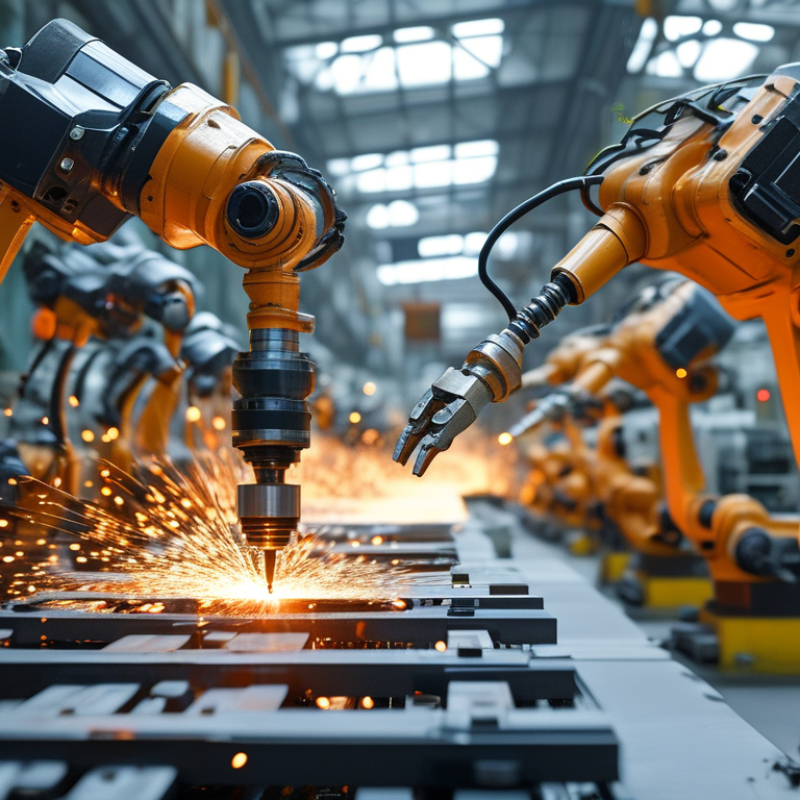
The evolution of machining technologies has been remarkable over the last few years. Reports indicate that the global advanced manufacturing market is projected to reach $573 billion by 2026. This growth is largely driven by innovations such as additive manufacturing, CNC machining, and automation. These technologies have enhanced precision and reduced production times significantly. According to a 2023 survey by the International Federation of Robotics, over 25% of manufacturers adopted robotics to streamline their operations.
However, embracing these technologies is not without its challenges. Companies often face high initial investment costs and a steep learning curve. Research from the National Institute of Standards and Technology notes that nearly 30% of firms struggle with the integration of new systems into existing processes. While advanced machining improves efficiency, the workforce may require extensive retraining to adapt to these modern methods. The combination of technological advancement and human adaptation remains a crucial consideration for future growth.
Advanced machining technologies are reshaping production lines in 2026, offering enhanced efficiency and precision. Techniques such as additive manufacturing and CNC machining are at the forefront of this revolution. According to recent industry reports, these methods can reduce production times by up to 30% while significantly decreasing material wastage. As industries evolve, integrating such technologies becomes essential for maintaining competitiveness.
Incorporating smart machining solutions is crucial. These systems utilize data analytics to optimize processes and improve decision-making. A study revealed that companies adopting intelligent machining techniques saw a 20% reduction in operational costs. This transition, however, isn’t without challenges. Employee training and adaptation to new workflows can pose hurdles that require careful management.
Tip: Consider investing in employee training to maximize the potential of new technologies. Engaging workers in the process can lead to smoother transitions and deeper insights into operational efficiencies. Exploration of hybrid machining techniques can further enhance capabilities, blending traditional methods with innovative approaches. Embracing these changes will not only streamline production but also drive long-term growth.
Automation and artificial intelligence are reshaping manufacturing efficiency in remarkable ways. Production lines no longer follow traditional methods. Machines can now communicate with each other, creating a seamless workflow. This connectivity enhances speed, reduces errors, and improves overall output. Human operators can focus on complex tasks while machines handle repetitive work.
The use of AI in machining offers insights that were previously unattainable. Data analysis helps identify bottlenecks in the production process. However, businesses must remain cautious. High reliance on automation can lead to job displacement. Maintaining a balance between human skills and machine efficiency is crucial. Skills training for workers becomes essential to adapt.
While these technologies promise enhanced precision, they are not flawless. Maintaining machinery and addressing system failures require human intervention, which can be challenging. Manufacturers must build robust support systems to mitigate these risks. Embracing technology is vital, but a thoughtful approach is necessary to ensure long-term success while supporting the workforce.
| Technology | Impact on Efficiency (%) | Reduction in Production Time (%) | Cost Savings (%) | Waste Reduction (%) |
|---|---|---|---|---|
| AI-Powered Predictive Maintenance | 25 | 20 | 15 | 30 |
| Robotic Process Automation (RPA) | 40 | 35 | 25 | 20 |
| Advanced CNC Machining | 30 | 15 | 20 | 25 |
| 3D Printing | 35 | 40 | 30 | 15 |
| IoT Integration | 28 | 22 | 18 | 27 |
In 2026, the integration of advanced machining technologies is revolutionizing production lines. A critical focus is sustainability. Advanced machining processes reduce waste through precision, enhancing resource efficiency. According to a recent industry report, companies adopting these technologies can decrease material waste by up to 30%. This efficiency not only benefits the environment but also boosts profitability.
Utilizing biodegradable lubricants and recyclable materials is increasingly common. Many firms report significant reductions in their carbon footprints. However, it's essential to acknowledge the challenges. Transitioning requires substantial investment and retraining. Not all companies are prepared to face these hurdles, which creates disparities in adoption rates.
Innovative techniques, such as additive manufacturing, are also gaining traction. This method reduces excess material while allowing for complex designs. However, the long-term sustainability of these technologies remains uncertain. Continuous evaluation of processes and materials is vital. The industry must address these concerns to fully harness the benefits of advanced machining.
In 2026, advanced machining technologies are set to revolutionize production lines. Data from the International Journal of Advanced Manufacturing Technology reports that the adoption of AI in machining is projected to increase by 35%. This integration enables predictive maintenance, minimizing downtime and increasing productivity. Smart tools equipped with sensors can analyze data in real-time, providing valuable insights for process optimization.
Additive manufacturing continues to expand its role. According to a recent market analysis, the global additive manufacturing market is expected to reach $41 billion by 2026. This method allows for complex designs and reduces material waste. However, many manufacturers struggle with its integration into traditional workflows. Challenges in skill development and technology costs remain significant barriers.
Automation continues to play a crucial role in enhancing efficiency. Research indicates that robotic automation could boost machining operations by 30%. Despite these advancements, companies face adaptation issues. Skilled workers are needed to oversee and manage these sophisticated systems, and there is a constant need for retraining. Balancing innovation with workforce readiness will be vital for successful implementation.
: Advanced machining processes reduce waste and enhance resource efficiency, benefiting both the environment and profitability.
Companies can decrease material waste by up to 30% through precision machining practices.
Biodegradable lubricants and recyclable materials are increasingly utilized to cut down carbon footprints.
Substantial investment and retraining are necessary, but not all companies are equipped to manage these changes.
Additive manufacturing minimizes excess material usage and allows for intricate designs, promoting efficiency.
The sustainability and continuous effectiveness of these technologies require ongoing evaluation and adaptation.
The integration of AI is projected to increase by 35%, enabling predictive maintenance and reducing downtime.
Robotic automation could improve machining operations by 30%, enhancing efficiency across production lines.
Integration into traditional workflows is challenging, compounded by skill development and technology costs.
A balance between innovation and workforce readiness, alongside continuous retraining, is essential for success.
In recent years, the evolution of machining technologies has significantly transformed production lines, paving the way for enhanced efficiency and precision. Key advanced machining techniques, such as multi-axis machining and additive manufacturing, are revolutionizing the production landscape, allowing for complex designs and reduced waste. Furthermore, the integration of automation and AI is optimizing manufacturing processes by improving operational efficiency and minimizing human error.
As companies increasingly prioritize sustainability practices within their advanced machining processes, they are also adapting to future trends that promise further evolution in 2026. This ongoing transformation highlights how advanced machining technologies change production lines, reshaping the way manufacturers meet demands for innovation, efficiency, and environmental responsibility. The future holds exciting potential as these technologies continue to advance and reshape the industry.

Cora CNC