CNC machining has changed how factories convert digital designs into finished parts. A modern five-axis machine can cut complex features with fewer setups, tighter repeatability, and less manual handling. Yet the machine itself is not the whole story. Tool selection, programming quality, inspection routines, material flow, and operator experience still decide whether capacity becomes real output.
This article examines how cnc machining improves production efficiency through seven practical advantages. These include shorter cycle times, reduced setup work, consistent quality, lower material waste, faster prototyping, safer automation, and stronger production visibility. McKinsey’s Industry 4.0 research reports that predictive maintenance can reduce machine downtime by 30–50% and increase machine availability by 10–20%. Deloitte’s 2023 Smart Manufacturing and Operations Survey also found that 86% of surveyed leaders expected smart manufacturing to become a major competitiveness driver within three years.
The numbers are encouraging, but they need careful interpretation. A poorly maintained CNC machine can still produce scrap at high speed. An automated process can also repeat the wrong program perfectly. NIST research on smart manufacturing emphasizes connected data, reliable standards, and measurable process control. That practical foundation matters on the shop floor, where a dull insert, a blocked coolant line, or a ten-minute setup delay can affect an entire shift.
Efficiency is not simply faster cutting. It is dependable production with fewer interruptions, fewer rejected parts, and clearer decisions. The following seven methods show where CNC machining creates measurable gains—and where manufacturers should remain cautious.
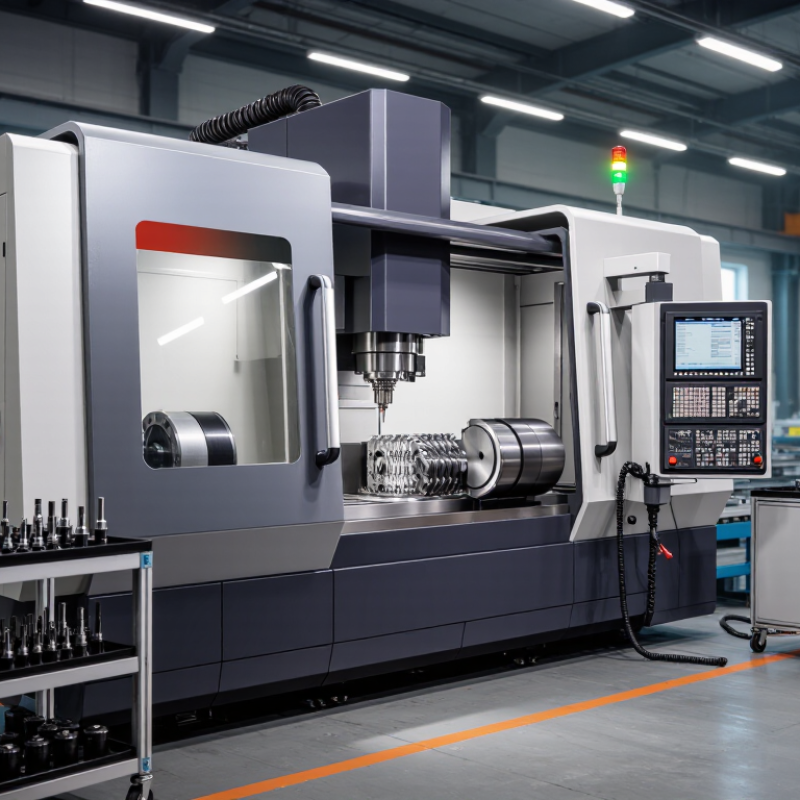
CNC machining streamlines production by turning approved digital designs into repeatable cutting instructions. Operators can transfer dimensions, toolpaths, and material data into a controlled workflow. This reduces manual measuring between operations and limits transcription errors. At the machine, preset tools and documented setups shorten changeovers. Small gains matter. An experienced machinist can spot unusual vibration, burrs, or heat before they damage a batch. That practical judgment remains essential, because software cannot explain every unexpected cut.
Production teams gain clearer scheduling when machining times, inspection points, and maintenance needs are recorded consistently. Parts can move from roughing to finishing with fewer idle periods. In-process probing checks critical features without removing the workpiece. Final inspection verifies dimensions against the engineering drawing, supported by traceable measurement records. Errors become visible. However, automation does not remove every bottleneck. A poorly planned fixture or an untested toolpath can stop an otherwise efficient line.
Reliable workflows include simulation, first-piece approval, tool-life monitoring, and scheduled maintenance. These controls help teams repeat successful settings across shifts. They also make training easier for new operators. In practice, strong results come from connecting people, data, machines, and inspection rather than chasing speed alone. Speed is not enough. Reviewing scrap causes and operator feedback can reveal weak assumptions, including some made during process planning. That reflection often leads to simpler setups, steadier output, and more dependable delivery.
CNC machining improves production efficiency when automation removes waiting between operations. Automated tool changes, probing, and pallet loading keep machines productive during unattended periods. A machinist can prepare the next job instead of repeatedly measuring parts or searching for tools. Small gains accumulate across every shift.
The 2024 Deloitte and Manufacturing Institute workforce study projects 3.8 million manufacturing jobs will be needed in the United States from 2024 to 2033, with 1.9 million potentially unfilled. CNC automation cannot solve that gap alone, but it reduces repetitive labor pressure. One operator can monitor several machines, review alarms, and manage inspection data. The International Federation of Robotics reported 541,302 industrial robots installed worldwide in 2023. This scale shows how manufacturers are using automation to protect throughput when skilled labor is limited.
Delays still happen. Poor tool-life settings, incorrect fixtures, or incomplete programs can stop an automated cell faster than a manual machine. That is the uncomfortable part. Automation magnifies weak processes. A practical response includes offline programming, standardized workholding, and in-process probing. These controls catch dimensional drift before a full batch becomes scrap. The 2024 Manufacturing Industry Report from the National Association of Manufacturers also identifies workforce capability and technology adoption as major competitiveness concerns. Training remains necessary. A highly automated shop still needs people who understand cutting forces, tolerances, maintenance, and data. Automation reduces labor time, but disciplined process design reduces the delays that automation alone cannot remove.
In a busy machining cell, precision starts before the spindle turns. A machinist checks the drawing, material condition, and tolerance stack. The programmer then selects toolpaths that remove only necessary stock. Accurate workholding prevents a part from shifting during a long cut. Even a small setup error can turn an expensive billet into scrap. CNC control also repeats proven coordinates, reducing variation between the first and hundredth part. This consistency limits rework caused by mismatched holes, uneven walls, or incorrect dimensions.
Material savings become visible in nesting and toolpath planning. Parts can be arranged closely on sheet or bar stock, while adaptive paths avoid unnecessary air cutting. Simulation helps reveal collisions and excessive engagement before material is loaded. In practice, an operator may save a nearly finished part by checking probing results after roughing. That check catches thermal drift and tool wear early. It is a modest step, but it can prevent hours of downstream work. Inspection records also connect each measurement to a process adjustment, making quality decisions easier to defend.
CNC is not automatically waste-free. That assumption needs correction. Poor feeds, blunt tools, or an inaccurate fixture still create scrap quickly. Production reviews often reveal another weakness: incorrect raw-stock measurements. A reliable process includes initial-part inspection, tool-life checks, and honest review of failed parts. Sometimes the best improvement is slower cutting on a critical feature. Less rework means fewer replacement blanks, fewer machine hours, and steadier delivery. Precision pays through controlled decisions, not automation alone.
Faster Setup and Tool Changes Increase CNC Production Output
On the shop floor, setup delays often hide inside ordinary tasks. An operator searches for gauges, offsets, or the correct cutting tool. The spindle remains silent. Standardized setup sheets, preset tools, and offline programming can move much of this work away from the machine. A 2023 Deloitte and MAPI Smart Manufacturing Survey reported 10–12% improvements in production output among manufacturers adopting smart operational practices. That figure is not automatic, but it shows the available direction.
Tool changes also affect more than cycle time. A consistent tool library reduces searching, incorrect offsets, and repeated first-piece adjustments. Quick-change holders and accessible tool carts can shorten a change from several minutes to less than one. Small gains compound across dozens of daily jobs. The U.S. Department of Energy’s Better Plants program emphasizes reducing idle and changeover losses as part of broader industrial efficiency work. The principle is practical: prepare before the spindle stops.
Some assumptions need testing. Faster is not always better. A rushed setup may create scrap, damaged tooling, or an unstable first run. Track setup minutes, first-piece approval time, tool-change frequency, and rejected parts separately. Review the data weekly. One experienced machinist may save time through judgment, yet that method can remain undocumented. That is a weakness. Capturing the method makes improvement repeatable, not dependent on memory.
Estimated average improvement in setup, machining, and material-handling efficiency from widely used CNC process practices.
Faster setup methods, preset tooling, quick-change fixtures, in-process probing, optimized toolpaths, tool-life monitoring, and production scheduling can reduce non-cutting time and increase available machine capacity. Actual results vary by machine type, part complexity, batch size, and operator experience.
Digital monitoring turns CNC machining from a process we inspect later into one we can understand while it runs. Sensors record spindle load, vibration, temperature, tool wear, and cycle time. Operators see changes on a live dashboard, often before a rough surface becomes visible. This early signal supports faster adjustments and reduces avoidable scrap. A stable cutting pattern also helps supervisors compare actual output with the planned schedule. Small delays become measurable.
Quality control improves when machine data is connected to inspection records. If a hole drifts beyond tolerance, technicians can trace the shift to a tool change, material batch, or temperature change. That evidence strengthens corrective action and supports reliable audits. In practice, experienced machinists still matter. They interpret unusual sounds, confirm sensor readings, and decide whether production should pause. Data guides judgment; it does not replace it. Calibration must be checked regularly, because inaccurate sensors can create confident mistakes.
Digital records also clarify production control across multiple shifts. Managers can review downtime, rework, utilization, and maintenance needs without relying on memory. Alerts can protect tools, but too many alerts cause fatigue. This is an imperfect area. A quiet dashboard may hide a poorly chosen threshold. Teams should review alert settings, compare predictions with physical measurements, and revise the system when results disagree. That habit keeps monitoring practical, transparent, and tied to measurable quality.
Automated tool changes, probing, and pallet loading reduce waiting between operations. Operators can prepare the next job instead of searching for tools. Small time savings accumulate across each shift.
One operator may monitor several machines, review alarms, and manage inspection data. This depends on equipment, training, and process stability. It is not always realistic.
Poor tool-life settings, incorrect fixtures, and incomplete programs can stop production quickly. Automation exposes weak processes. That part is uncomfortable.
Offline programming, standardized workholding, and in-process probing can reduce interruptions. Regular training also matters. Machines still need informed decisions.
Accurate workholding prevents movement during cutting. Consistent coordinates reduce mismatched holes, uneven walls, and incorrect dimensions. Fewer errors mean fewer replacement blanks.
Close nesting uses sheet or bar stock more efficiently. Adaptive toolpaths reduce unnecessary air cutting. Simulation can reveal collisions before material enters the machine.
Operators should inspect the initial part and check probing results after roughing. Early measurements can reveal thermal drift or tool wear. Waiting may cost hours.
No. Blunt tools, poor feeds, inaccurate fixtures, and wrong stock measurements still create scrap. Automation is not automatically waste-free.
Inspection records connect measurements with process adjustments. They help explain quality decisions and identify repeated problems. Records alone cannot repair a weak process.
People must understand cutting forces, tolerances, maintenance, and production data. Sometimes slower cutting protects a critical feature. That trade-off deserves honest review.
CNC machining improves production efficiency by creating a more streamlined, consistent, and measurable manufacturing workflow. Once a digital design is prepared, automated machining operations can perform repeated tasks with limited manual intervention, reducing labor time, handling errors, and process delays. High precision also helps manufacturers produce parts within tight specifications, minimizing material waste, rejected components, and costly rework. These advantages make how cnc machining improves production efficiency especially valuable for both short production runs and large-scale manufacturing.
Faster machine setup, automated tool changes, and organized production scheduling allow more parts to be completed in less time. In addition, digital monitoring systems can track machine performance, production progress, tool condition, and quality results in real time. This information enables operators to identify issues early, adjust processes quickly, and maintain stable output. By combining automation, precision, speed, and continuous production control, CNC machining supports higher productivity, lower operating costs, and more reliable delivery performance.

Cora CNC