2026 Top Industries That Rely Most on CNC Machining?

Time:2026-05-05 Author:Ethan
0%

In the rapidly evolving landscape of manufacturing, understanding "what industries rely most on CNC machining" has become crucial. According to industry expert Dr. Emily Tran, "CNC machining is the backbone of modern production across various sectors." This statement underscores the critical role of CNC technology in enhancing precision and efficiency in manufacturing.

Industries such as aerospace, automotive, and medical devices are heavily dependent on CNC machining. Each sector requires exact specifications and high-quality materials. For instance, the aerospace industry relies on CNC for turbine components that must withstand extreme conditions. Similarly, medical devices often demand intricate designs that CNC machining can achieve reliably.

The challenge lies in adaptability. As technology advances, so do production needs. Companies must continuously evaluate their processes. The future may bring new materials and techniques, pushing industries to rethink their reliance on CNC machining. This constant evolution invites reflection on how companies can improve their manufacturing practices and stay competitive.
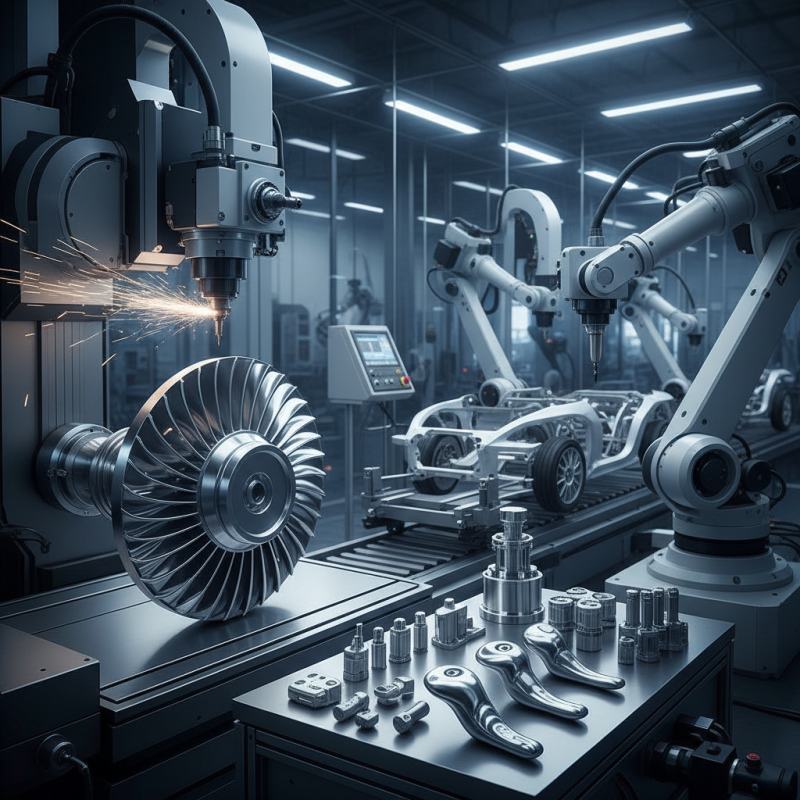
2026 Top Industries That Rely Most on CNC Machining?

The Role of CNC Machining in Aerospace Manufacturing Efficiency

CNC machining plays a critical role in aerospace manufacturing. The precision and efficiency of this technology can significantly enhance production processes. According to a recent industry report, CNC machining has boosted production efficiency by up to 30%. This advancement is essential for creating complex components used in modern aircraft.

However, relying solely on CNC technology can lead to challenges. Manufacturers must ensure proper training for operators. Skilled personnel are essential to maximize the benefits of CNC machining. A lack of training can result in errors and inefficiencies, ultimately increasing costs. Moreover, incorporating real-time data analysis can enhance precision and allow for proactive problem-solving.

**Tip:** Regularly evaluate your CNC equipment for maintenance. This can prevent costly downtimes and improve overall productivity. Consider integrating advanced analytics for better decision-making. Take a step back and assess what changes could lead to better outcomes. Being open to adjustments can lead to significant improvements in efficiency.

Key CNC Machining Applications in Automotive Industry Growth

CNC machining is revolutionizing the automotive industry. This technology allows for precision manufacturing. It creates components that meet exact specifications. According to a recent report, the CNC machining market is projected to grow significantly by 2026. This growth is driven by increased demand for lightweight materials and complex designs. Advanced CNC machines can produce parts that were once unimaginable.

The automotive sector relies heavily on CNC machining. Key applications include engine components, transmission parts, and custom fittings. These parts require intricate design and high tolerance levels, which CNC machining provides. A study found that the automotive industry accounted for over 40% of total CNC machining usage. This showcases its essential role in the sector's growth.

Tips: Always consider how optimized machining processes can reduce waste. Evaluate the potential of adopting multi-axis machines for enhanced efficiency. Additionally, be open to revisiting your machining strategies, as technology evolves rapidly. Embracing change can lead to significant improvements in production quality.

Medical Device Production: The Dependence on CNC Machining Technologies

CNC machining plays a critical role in medical device production. Precision is essential in this industry, where even the smallest error can have serious consequences. Manufacturers rely on CNC technologies to create intricate parts, from surgical instruments to implants. These components require high accuracy and repeatability, something only CNC machines can consistently deliver.

Additionally, the evolving nature of healthcare demands rapid innovation. New medical devices must be developed quickly to meet patient needs. CNC machining allows for faster prototyping and production cycles. Companies can adapt designs as needed, ensuring that they remain competitive. However, this dependence does raise questions about the potential for over-reliance on technology.

Quality control is another significant aspect of CNC in the medical field. While CNC machines improve production efficiency, they also necessitate stringent checks. Errors during programming or setup can lead to defective parts. This risk highlights the need for skilled operators and thorough inspection processes. Balancing speed and quality remains a challenge in the medical device industry.

Consumer Electronics Sector's Increased Demand for CNC Machining Precision

The consumer electronics sector has seen a sharp increase in the demand for CNC machining precision. According to a recent report by industry analysts, this sector is projected to grow at a compound annual growth rate (CAGR) of 6.7% through 2026. This growth is driven by the need for high-quality components that meet stringent performance standards.

CNC machining offers unparalleled precision, making it ideal for intricate electronic components. For instance, in smartphone manufacturing, the tolerances can be as tight as 0.01mm. This precision is crucial, as even minor discrepancies can affect functionality and user experience. The reliance on CNC machining ensures that manufacturers can keep pace with rapid design iterations and shorter product life cycles.

However, challenges remain. Many companies struggle with the initial setup costs of CNC machines. The skills required to operate these machines are also in high demand. There's a noticeable skills gap in the workforce that could slow down production capabilities. As the industry evolves, manufacturers must continually adapt to new technologies while addressing these obstacles to retain their competitive edge.

2026 Top Industries That Rely Most on CNC Machining

This chart illustrates the projected demand for CNC machining in various industries by 2026. The consumer electronics sector shows a significant increase due to the growing need for precision in manufacturing components.

Emerging Trends in CNC Machining for the Construction Industry

The construction industry is increasingly adopting CNC machining technology. This shift is driven by the need for precision and efficiency. Recent trends show a rise in automated machining centers. These centers enhance speed and reduce human error. Builders can achieve more complex designs with less effort. Customization is becoming easier thanks to CNC capabilities.

Moreover, the integration of AI into CNC machining is a noticeable trend. This development allows for better predictive maintenance. Builders can avoid downtime and costly repairs. However, the reliance on technology raises concerns. Some skilled workers fear job loss due to automation. Balancing technology and human expertise is crucial.

Sustainability is also a growing focus in CNC machining for construction. Companies are looking for ways to minimize waste. Using recyclable materials is becoming common. Nevertheless, the push for eco-friendly practices presents challenges. Finding suitable materials that meet performance standards can be tricky. These evolving trends highlight the industry's complex landscape.

2026 Top Industries That Rely Most on CNC Machining

Industry Percentage of CNC Usage Key Applications Emerging Trends
Aerospace 75% Component manufacturing, Prototyping Increased automation, Lightweight materials
Automotive 70% Engine parts, Drivetrain components Electric vehicle manufacturing, Smart tech integration
Medical Devices 65% Surgical instruments, Implants Customized products, Advanced biocompatible materials
Construction 60% Structural components, Custom fixtures Sustainable materials, Automation in building processes
Electronics 55% Circuit boards, Enclosures Miniaturization, Smart technology integration

FAQS

: What are the main benefits of CNC machining in the automotive industry?

: CNC machining offers precision manufacturing and the creation of components with exact specifications.

How significant is CNC machining usage in the automotive sector?

The automotive industry uses over 40% of total CNC machining, driving its growth significantly.

What challenges do companies face when adopting CNC machining in consumer electronics?

Companies struggle with high initial setup costs and a skills gap in the workforce.

Why is precision crucial in consumer electronics manufacturing?

Tolerances can be extremely tight, affecting functionality and user experience if discrepancies occur.

How is CNC machining evolving in the construction industry?

The construction sector is adopting CNC for greater precision, efficiency, and complex designs.

What role does AI play in modern CNC machining?

AI integration enhances predictive maintenance, reducing downtime and avoiding costly repairs.

What sustainability concerns arise in CNC machining?

Companies aim to minimize waste, but finding eco-friendly materials that perform well is challenging.

How can companies improve their machining processes?

Evaluate optimized processes and consider multi-axis machines for better efficiency.

What can be done to address the skills gap in CNC machining?

Manufacturers must invest in training programs to ensure a skilled workforce for future demands.

Why should businesses revisit their machining strategies?

Technology evolves rapidly, and adapting can lead to significant quality improvements in production.

Conclusion

The article "2026 Top Industries That Rely Most on CNC Machining" explores the critical role of CNC machining across various sectors. It highlights how aerospace manufacturing benefits from enhanced efficiency and precision through CNC technologies. In the automotive industry, key applications of CNC machining contribute significantly to growth, enabling the production of complex components with high accuracy. The medical device sector shows an increasing dependence on CNC machining for the production of intricate devices, ensuring reliability and safety in healthcare.

Additionally, the consumer electronics sector is witnessing a surge in demand for CNC machining due to the necessity for precise manufacturing of small and complex parts. The article also discusses emerging trends in CNC machining within the construction industry, hinting at its growing importance. Overall, the discourse reveals which industries rely most on CNC machining, underscoring its centrality in advancing manufacturing capabilities across various fields.

Ethan

Ethan

Ethan is a seasoned marketing professional with a deep expertise in our company's innovative product line. With a passion for sharing knowledge and insights, he takes the lead in regularly updating our corporate blog, where he explores industry trends, product features, and effective marketing......