2026 Best CNC Machine Suppliers How Do You Choose?

Time:2026-09-26 Author:Henry
0%

Choosing a CNC machine supplier is not just a price comparison. The right partner must fit the parts, materials, tolerances, and production volume a manufacturer actually needs. A machine cutting aluminum brackets may not suit hardened-steel components or complex five-axis work. Small details matter: spindle condition, control system, tool availability, installation support, and the response time for service calls.

W. Edwards Deming, a leading quality-management expert, wrote, “Quality comes not from inspection, but from improvement of the production process.” That principle offers a useful lens for evaluating suppliers. Ask how they verify machine performance, train operators, and support process improvements after installation. Request sample-part results, references from comparable shops, and clear service commitments. A polished brochure is not proof. A precise answer about uptime or parts lead times is more useful.

This guide explores how manufacturers choose cnc machine suppliers in 2026, from defining technical requirements to comparing total ownership costs. It also considers software compatibility, automation options, financing, and long-term support. The “best” supplier depends on the work ahead, not a ranking alone. Even a careful scorecard has limits; shop-floor needs can change, and forecasts can be wrong. That deserves a second look. Manufacturers should confirm key claims directly and leave room to reassess before committing.
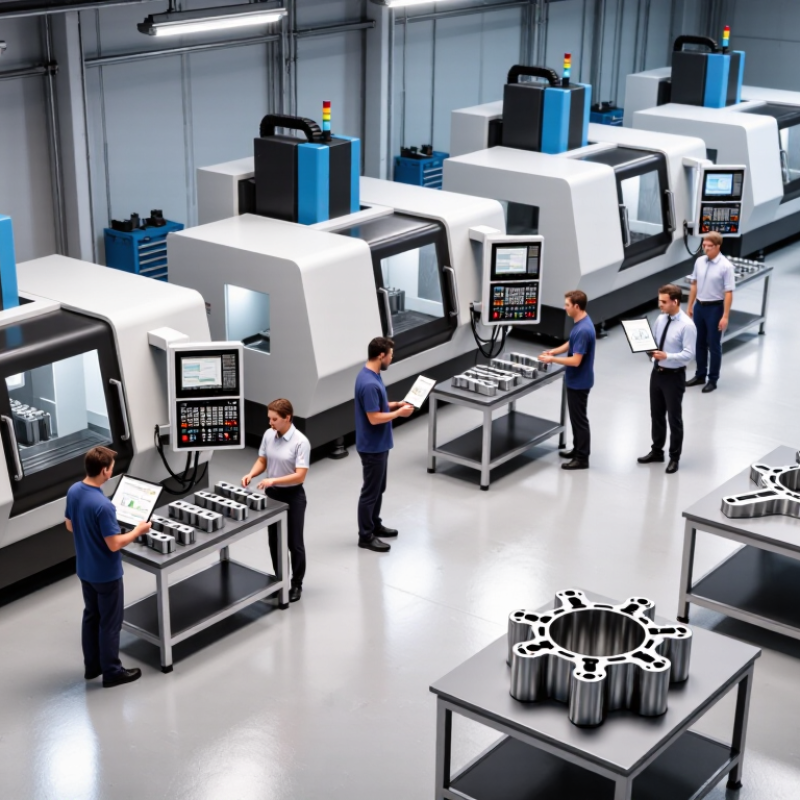
2026 Best CNC Machine Suppliers How Do You Choose?

Understanding the Types of CNC Machine Suppliers

CNC machine suppliers usually fall into a few practical categories: manufacturers, distributors, system integrators, and used-equipment dealers. Manufacturers can provide direct technical information about machine design, tolerances, and available configurations. Their range may be limited, though. A distributor often carries several machine types and can help compare options, but its service depends on the support team behind the sale.

System integrators connect a CNC machine with tooling, software, automation, or inspection equipment. They suit shops that need a working production cell, not just a machine delivered to the floor. Ask who will handle installation, operator training, and troubleshooting. Get those details in writing. A polished demonstration is useful, but it cannot show every production issue.

Used-machine suppliers can lower the purchase price, especially when a machine’s condition and service history are documented. Check spindle hours, control condition, backlash, and the availability of replacement parts. A short test cut can reveal vibration or inconsistent finishes. It is easy to focus on the sticker price. That can be a mistake. Compare delivery, setup, maintenance, and response times across supplier types; the best fit depends on your workload, staff skills, and tolerance for downtime.

Defining Your Production Needs and Machine Requirements

A CNC machine should fit the work you actually run, not an idealized future order. List each part’s dimensions, material, tolerance, batch size, and monthly volume. Then identify the operations required: milling, drilling, turning, or multiple setups. A 600 mm aluminum plate may need a larger table and longer tool travel than its finished dimensions suggest. Leave clearance for fixtures and tool changes.

Measure the bottlenecks. Record cycle times, setup time, spindle utilization, scrap, and operator interventions across representative shifts. A fast spindle is not automatically productive if parts need repeated clamping. Check torque at the speeds your materials require, axis travel, tool capacity, coolant handling, and the control functions operators can use confidently. Build in capacity for realistic growth, but avoid paying for unused travel or automation. That trade-off is easy to misjudge.

The 2024 Deloitte and Manufacturing Institute talent study estimates that U.S. manufacturing may need 3.8 million workers by 2033, with 1.9 million jobs potentially unfilled. That makes training, maintenance access, and ease of programming practical machine-selection criteria, not extras. Deloitte’s 2024 Smart Manufacturing Survey found that 92% of surveyed manufacturers viewed smart manufacturing as a competitiveness driver. Treat connectivity as useful only when it supports clear needs, such as downtime tracking or traceability. Data can help. Poor data can mislead. Before requesting quotes, prepare sample parts, drawings, tolerance requirements, and a production schedule; ask suppliers to demonstrate the process using your material.

2026 Best CNC Machine Suppliers: How Do You Choose? — Defining Your Production Needs and Machine Requirements

Production Need Questions to Define Machine Requirements to Evaluate Practical Selection Guidance
Part material Will you machine aluminum, steel, stainless steel, titanium, plastics, or multiple materials? Spindle power and torque, compatible tooling, workholding, coolant delivery, and machine rigidity. Match the machine to the hardest-to-cut material in your planned mix. Ask for a sample cut using your material and tooling where possible.
Part size and work envelope What are the maximum part dimensions, and how much clearance is needed for fixtures and tools? X, Y, and Z travel; table or chuck capacity; tool clearance; door opening; and loading access. Choose travel that accommodates the complete setup, not just the bare part. Confirm usable capacity with the intended fixture installed.
Production volume How many parts are required per shift, week, or year? Is demand steady or variable? Cycle time, tool capacity, automatic tool changing, pallet options, unattended-operation provisions, and service availability. Estimate total cycle time, including loading, inspection, and tool changes. Compare the result with actual shift hours and planned downtime.
Part complexity Does the part need multi-sided machining, angled features, contours, or simultaneous-axis cutting? Number of controlled axes, rotary-axis capability, fixture access, CAM compatibility, and postprocessor support. Consider a 3-axis machine for accessible prismatic work; evaluate 4- or 5-axis capability when it can reduce setups or reach complex features.
Accuracy and surface finish What are the drawing tolerances, geometric requirements, and surface-finish targets? Positioning and repeatability specifications, thermal control, feedback systems, machine calibration, and inspection capability. Compare specifications under stated test conditions. Confirm that the complete process—including tooling, fixtures, temperature, and measurement—can meet the drawing.
Operation type Are you mainly milling, turning, drilling, cutting sheet, or combining operations? Machine configuration, spindle or cutting system, workholding, tool interface, and suitable chip or dust management. Start with the operation that defines the part. For combined work, compare the cost and process benefits of an integrated machine with separate operations.
Programming and staffing What CNC, CAD/CAM, setup, and maintenance skills are available in-house? Control usability, supported programming methods, simulation tools, training, documentation, and remote-support options. Include operator and programmer training in the purchase plan. Verify software compatibility with existing workflows before ordering.
Factory and installation What floor space, power, compressed air, coolant handling, and foundation conditions are available? Machine footprint, total installed load, utility specifications, floor loading, access for delivery, and installation requirements. Request site-preparation requirements early and check them with facility personnel before finalizing the machine configuration.
Budget and operating cost What is the total budget, and what costs matter over the expected service life? Purchase price, installation, tooling, fixtures, software, energy use, maintenance, consumables, and spare-parts availability. Compare total ownership cost rather than purchase price alone. Ask for a clear list of included equipment, options, and recurring costs.
Supplier support How quickly must service be available, and what support is needed after installation? Service coverage, response process, parts access, warranty terms, commissioning, training, and preventive-maintenance support. Check the written support terms and clarify who provides installation, training, warranty service, and ongoing technical assistance.

Planning note: Requirements and machine capabilities vary by model, configuration, tooling, and operating conditions. Treat this table as a selection checklist and verify all specifications with the supplier for your intended process.

Evaluating Supplier Expertise, Machine Quality, and Technology

A capable CNC supplier should explain how its machines fit your actual work, not just quote spindle speed and positioning accuracy. Ask for a cutting demonstration using similar material, tooling, and tolerances. Watch chip flow, vibration, and finish quality. Then request the test conditions and measurement method. Details matter.

Supplier expertise shows in what happens after delivery. Can the team support installation, operator training, preventive maintenance, and troubleshooting? Deloitte and the Manufacturing Institute’s 2024 study estimated that U.S. manufacturing may need 3.8 million workers by 2033, with 1.9 million jobs potentially unfilled. That makes practical training a serious purchasing factor, not a bonus. Still, a polished service promise is not proof; ask for response-time records and a sample maintenance plan.

Machine quality needs evidence across repeated cycles, not one impressive sample. Review inspection reports, component specifications, warranty terms, and references from comparable production environments. Technology also deserves scrutiny. The International Federation of Robotics reported 4,281,585 industrial robots operating worldwide in 2023, up 10% from 2022. Automation is expanding. But a connected control system is useful only if it works with your workflow, staff, and data practices. I would not choose on specifications alone; real factory conditions can expose gaps that a brochure misses.

2026 Best CNC Machine Suppliers: How Do You Choose?

A practical framework for comparing supplier expertise, machine quality, and technology.

How to use this chart: These illustrative weights are a planning framework, not survey results or supplier rankings. Adjust them to your application, and verify machine performance with documented test results, such as positioning accuracy tests conducted in accordance with ISO 230-2.

Comparing Total Costs, Delivery Times, and Ongoing Support

Choosing a CNC machine supplier means pricing the whole ownership journey, not just the machine. Compare installation, tooling, freight, operator training, software, and expected maintenance. Ask for a written quote with exclusions clearly listed. A low purchase price can hide costly setup delays or unavailable replacement parts. The quote is only a start.

Delivery promises need evidence. Request a production schedule, shipping terms, and recent on-time delivery figures for comparable machines. MHI’s 2024 Annual Industry Report found that 55% of surveyed organizations planned to increase investment in supply-chain innovation over the next five years. That broader shift makes supplier visibility worth checking: ask how schedule changes are communicated and whether critical components are locally stocked. Also test support before buying. Send a technical question and note the response time, clarity, and escalation path. A vague answer matters. It may not predict every service call, but it is a useful signal.

Tips: Compare total costs over five years, not just upfront quotes. Ask for service response targets, parts lead times, and a sample maintenance plan. Put delivery and support commitments in writing, then check whether the supplier can actually meet them.

Verifying Supplier Credentials and Building a 2026 Shortlist

Build a 2026 shortlist around evidence you can inspect, not polished capability claims. Ask each CNC supplier for current quality certificates, scope pages, calibration records, and sample inspection reports tied to similar parts. Check the certificate holder, site address, expiry date, and whether machining is covered. ISO’s 2023 Survey reports more than 1.2 million ISO 9001 certificates worldwide; that scale makes verification essential, not optional. Certification signals a system, not spindle accuracy. Request a first-article report, tool-wear plan, and a real response-time example.

Then test operational fit. Ask for machine age, work-envelope limits, tolerance history, preventive-maintenance logs, and backup capacity during breakdowns. Deloitte and MAPI’s 2024 Smart Manufacturing and Operations Survey found that 86% of executives expect smart manufacturing to drive competitiveness within five years. Traceable production data matters, but a dashboard alone proves little. Request anonymized cycle-time records and ask how operators handle rejected parts. Compare three to five suppliers using identical drawings, volumes, materials, and delivery windows. Visit the shop if feasible; watch a tool change, then ask who owns corrective action. Shortlist suppliers willing to discuss gaps. Some may hesitate. Note that, and ask one more question.

FAQS

What costs should I compare when choosing a CNC machine supplier?

Compare the machine, installation, tooling, freight, training, software, and maintenance. Review expected costs over five years. A low quote may hide setup delays or hard-to-find parts.

How can I check whether a delivery estimate is reliable?

Ask for a production schedule, shipping terms, and recent delivery results for similar machines. Check how schedule changes are shared and whether key components are stocked nearby. Get commitments in writing.

How should I test a supplier’s support before buying?

Send a real technical question. Note the reply time, clarity, and escalation path. A vague answer is a warning, though not a perfect forecast.

What should I inspect when verifying supplier credentials?

Request current certificates, scope pages, calibration records, and inspection reports for similar parts. Check the site address and expiry date. A certificate does not prove spindle accuracy.

Which production records are useful to request?

Ask for a first-article report, tool-wear plan, preventive-maintenance logs, and anonymized cycle-time records. Also ask how operators handle rejected parts. The answer may reveal gaps.

How can I assess whether a supplier fits my operation?

Confirm machine age, work-envelope limits, tolerance history, and backup capacity during breakdowns. A dashboard alone proves little. Ask who acts when a process fails.

How many suppliers should I compare, and how can I keep it fair?

Compare three to five suppliers using the same drawings, volumes, materials, and delivery windows. Small differences in the request can distort the results.

What should I look for during a shop visit?

If feasible, watch a tool change and ask who owns corrective action. Notice how staff discuss problems. Some may hesitate. Ask one more question.

Conclusion

Choosing the right CNC machine supplier in 2026 starts with understanding the different types of suppliers and matching their offerings to your production needs. Define the materials, part complexity, output volume, precision, and automation your operation requires before comparing machines. This makes it easier to identify suppliers whose expertise, machine quality, technology, and customization options fit your goals.

When considering how manufacturers choose cnc machine suppliers, the decision should extend beyond the initial purchase price. Compare the total cost of ownership, including installation, training, maintenance, and operating expenses, as well as delivery schedules and the availability of ongoing technical support. Verify supplier credentials, assess the clarity of warranty and service terms, and gather relevant customer feedback. Use these criteria to create a focused shortlist, then discuss your requirements directly with each candidate before making a final decision.

Henry

Henry

Henry is a dedicated marketing professional with a profound expertise in the company's offerings. With years of experience in the industry, he possesses an impressive understanding of the market dynamics and consumer behaviors that drive success. Henry is committed to sharing his insights through......